Programme 2026
Please note I am adding to the programme regularly.
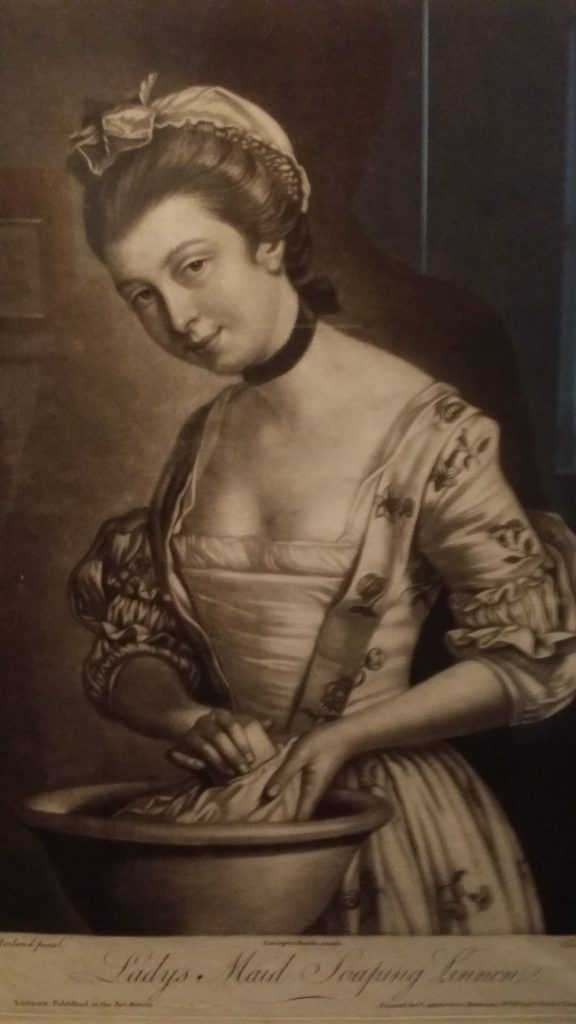
Jane Austen’s London Walk
| 31 May 2026 | Tour du Jour | 2.30 pm | 4.30 pm | Summer | Reserve Online |
| 5 July 2026 | Tour du Jour | 2.30 pm | 4.30 pm | Summer | Reserve Online |
| 2 August 2026 | Tour du Jour | 2.30 pm | 4.30 pm | Summer | Reserve Online |
| 5 September 2026 | Tour du Jour | 2.30 pm | 4.30 pm |
Green Park underground station, Green Park exit, by the fountain)
“It is a truth universally acknowledged, that a Jane Austen devotee in possession of the good fortune of a couple of free hours today must be in want of this walk.”
People associate Jane Austen and her characters with a rural setting. But London is central to both Jane Austen’s real life and her literary life. So, this tour will explore Jane’s connections with London and give the background to Sense and Sensibility, a good part of which is based in this very area. We begin with the place Jane’s coach would arrive from Hampshire, and then walk the streets haunted by Willougby; past shops visited by the Palmers, the Ferrars; visit the location of Jane Austen’s brother’s bank and see the publisher of Jane’s Books. The area around Old Bond Street was the home of the Regency elite and many buildings and a surprising number of the shops remain as they were in Jane Austen’s day.
To book
The First Blitz – Zeppelin London New Walk!
6pm Sun 31 May 2026 To Book

To commemorate the Zeppelin Raids and London in World War 1
The nightmare began on May 31st, 1915.
On a bright, moonlit night a single German Zeppelin floated over London. High above the sleeping city it moved almost silently, visible sometimes only because it blotted out the stars. Then the bombs began to fall.
High explosives. Incendiaries. Civilian homes in the firing line.
Seven Londoners were killed that night. It was the first time in history the capital had been attacked from the air. And Londoners suddenly discovered something deeply unsettling: the greatest city in the world was frighteningly exposed.
This was the new warfare — death from above.
The giant gas-filled airships could drift in under cover of darkness, cross the capital at height, and release their deadly cargo before many people even realised what was happening. Early defences were pathetically inadequate: a few anti-aircraft guns, scattered rifle fire, and primitive aircraft that struggled to reach the enemy. For a time, London was effectively a sitting target.
What began on that May night soon became a grim pattern.
Although this walk runs on the anniversary of the first raid, the route we follow recreates a later and more typical Zeppelin attack from September 1915 — when the raiders had found their deadly rhythm. Airships crossed Hertfordshire, swept over Bloomsbury — Euston, Russell Square — and pushed on across the City toward Liverpool Street and the East End.
In short, what started on 31 May found its full and frightening expression in the raid we trace on this walk — the true quintessence of the Zeppelin nights.
So, yes, a Zeppelin night walk. But also a before and after walk.
Because to understand the shock of the raids, we have to see the London they shattered. As we make our way east, the story unfolds in a series of vivid flashbacks. We glimpse the capital in its last years of confident innocence — the beating heart of a global empire — and then watch as the Zeppelin war tears into that world and changes the mood of the city almost overnight.
In effect, we walk the fault line between the London that was and the London that emerged after the fall.
To Book:
In Search of Saxon London
| 7 June 2026 | Tour du Jour | 11 am | 1 pm | Reserve Online | |
| 5 July 2026 | Tour du Jour | 11 am | 1 pm | Reserve Online | |
| 6 September 2026 | Tour du Jour | 11 am | 1 pm | Reserve Online | |
| 22 November 2026 | Tour du Jour | 11 am | 1 pm |
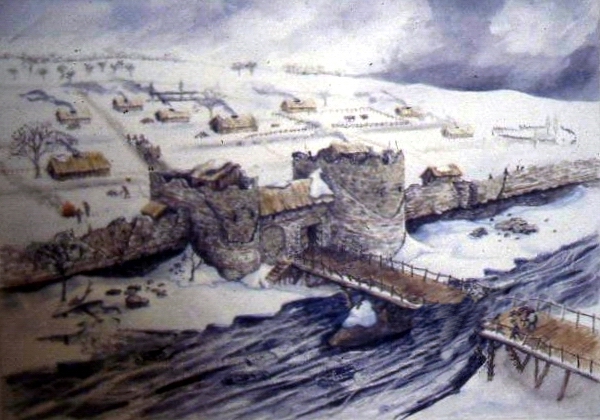
An exploration of what happened following the Roman Period. How did a Celtic speaking Latin educated Roman City become, first deserted, then recovered to become the leading City in a Germanic speaking Kingdom?
The Romans gave the name of Saxons to the barbarian pirates that plagued the North Sea region in the Late Roman Period. Historians link them with the Angles and Jutes who, according to the Venerable Bede, conquered the Roman Province of Britannia and turned it into England. London became its leading town.
But excavation and DNA analysis make the traditional story more difficult to sustain and although the Anglo-Saxons have a rich history how much of it can be trusted? Was there a Dark Age? Or was it just a ‘transition’ from Roman to English? How did English become the main language sweeping aside native Celtic and Latin languages? Much of the story of Saxon London has been founded on myth and dubious historical sources, but archaeological, documentary and genetic research are, perhaps, beginning to provide a clearer narrative.
Tudor London – The City of Wolf Hall
3pm 4th July 2026 To Book
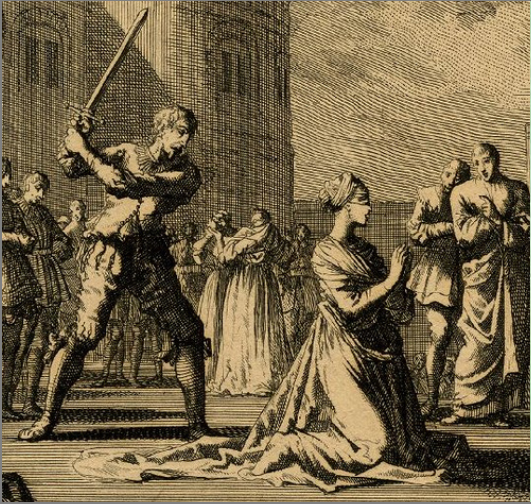
The Walk creates a portrait of London in the early 16th Century, with particular emphasis on the life and times of Thomas Cromwell and Thomas More during the Anne Boleyn years.
To Book
Jane Austen’s London Walk 2:30pm Sun 5th July 2026 To book
London. 1066 and All That Walk 11.30am Sun 12th July 26 Tobook
Bloody, Flaming, Poxy London 3pm Sun 12th July 26 To book
Myths, Legends, Archaeology, and the Origins of London
3pm Sat 1 Aug 2026 Tower Hill Underground To book
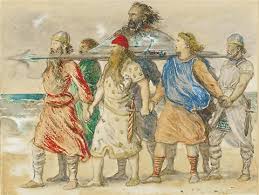
The walk tells the stories of our changing ideas about the origins of London during the Prehistoric, Roman and Saxon periods.
The walk is led by Kevin Flude, a former archaeologist at the Museum of London, who has an interest both in myths, legends and London’s Archaeology
The walk will tell the story of the legendary origins of London which record that it was founded in the Bronze Age by an exiled Trojan and was called New Troy, which became corrupted to Trinovantum. This name was recorded in the words of Julius Caesar; and, then, according to Legend, the town was renamed after King Ludd and called Lud’s Dun. Antiquarians and Archaeologists have taken centuries to demolish this idea, and became convinced London was founded by the Romans. Recently, dramatic evidence of a Bronze Age presence in London was found.
When the Roman system broke down in 410 AD, historical records were almost non-existent, until the Venerable Bede recorded the building of St Pauls Cathedral in 604 AD. The two hundred year gap, has another rich selection of legends. which the paucity of archaeological remains struggles to debunk.
The walk will explore these stories and compare the myths and legends with Archaeological discoveries.
The route starts at Tower Hill, then down to the River at Billingsgate, London Bridge, and into the centre of Roman London.
The Decline And Fall Of Roman London Walk 11:15am 2nd Aug 26 To book
Jane Austen’s London Walk 2:30pm Sun 2nd Aug 26 To book
Chaucer’s Medieval London Guided Walk 11.00am Sat 5th Sept 2026 To book
Jane Austen’s London Walk 2:30pm Sun 5th Sept 2026 To book
Jane Austen’s London Walk 2:30pm Sat 24th Oct 2026 To book
Walks yet to be programmed but coming up
London Bridge to Bermondsey

Sat 2nd May 2026 London Bridge tube station Tooley Street Exit
Short read: Archaeology, Industry & Literature (guided by the distinguished emeritus Museum of London archaeologist and Curator Kevin Flude).
Long read: The area south of London Bridge is one of the most charismatic areas of London. It fascinated Charles Dickens who called it ‘the Borough’ and used it in many books. It was, for example, the home of the infamous Bill Sykes. On this walk we are going to explore the eastern half of the Borough, walking from the Tube Station along the River and then follow the route to the famous Monastery at Bermondsey. This route was one of London’s working-class areas, particularly leather workers and it has many traces of London’s extensive industrial heritage. We explore working-class lives before ending the tour at Barmsey Abbey, as Londoners called it. It was patronised by the Queen and became one of the most famous places in London. Some of the Ruins survive and still influences the street pattern. The tour will provide a history of Southwark since the Bronze Age as well as much more.
LONDON BRIDGE TO BERMONDSEY – THE PRACTICALS
To go on the London Bridge to Bermondsey walk meet Kevin just outside the Tooley Street exit of London Bridge Tube Stop
To Book:
Roman London – Literary & Archaeology Walk

This is a walking tour features the amazing archaeological discoveries of Roman London, and looks at life in the provincial Roman capital of Londinium.
This is a walking tour that features the amazing archaeological discoveries of Roman London, and looks at life in the provincial Roman capital of Londinium.
Our Guides will be Publius Ovidius Naso and Marcus Valerius Martialis who will be helped by Kevin Flude, former Museum of London Archaeologist, Museum Curator and Lecturer.
We disembark at the Roman Waterfront by the Roman Bridge, and then explore the lives of the citizens as we walk up to the site of the Roman Town Hall, and discuss Roman politics. We proceed through the streets of Roman London, with its vivid and cosmopolitan street life via the Temple of Mithras to finish with Bread and Circus at the Roman Amphitheatre.
Zinger Read: Talk about a high-quality one-two punch. This walk investigates the groundbreaking archaeological discoveries of Roman London. And then it reconstructs life in a provincial Roman capital using archaeological and literary sources. Discoveries – insights – like flashes of lightning in a cloud. We begin at the site of the Roman bridge. We might be decent young Roman citizens in togas, having this and that bit of
explained to us as we make our way towards the Roman Town Hall. From there we head to the site of the excavation called ‘the Pompeii of the North.’ Followed by the Temple of Mithras. We finish with a walk along the Roman High Street in order to end at the site of the Roman Amphitheatre. So, yes, welcome to London as it was 2,000, 1,900, 1,800, 1,700 and 1,600 years ago. And, yes, the walk’s guided by a real expert, the distinguished emeritus Museum of London archaeologist Kevin Flude. That means you’ll see things other people don’t get to see, delve into London via fissures that aren’t visible, let alone accessible, to non-specialists.
REVIEWS
“Kevin, I just wanted to drop you a quick email to thank you ever so much for your archaeological tours of London! I am so thrilled to have stumbled upon your tours! I look forward to them more than you can imagine! They’re the best 2 hours of my week! 🙂 Best, Sue
To book
Charles I and the Civil War. Martyrdom Anniversary Walk
To be next run last sunday in January 2027 To book

The Civil War, Restoration and the Great Fire of London Virtual Tour
To be run on last Sunday of January 2027

January 30th is the Anniversary of the execution of Charles I and to commemorate it we explore the events and the aftermath of the Civil War in London.
Description
Along with the Norman Conquest of 1066 and winning the World Cup in 1966 the Great Fire in 1666 are the only dates the British can remember!
And we remember the Great Fire because it destroyed one of the great medieval Cities in an epic conflagration that shocked the world.
But it wasn’t just the Great Fire that made the 17th Century an epic period in English History. There was a Civil War, beheading of the King, a Republic, a peaceful Restoration of the Monarch, the last great plague outbreak in the UK, the Glorious Revolution and the Great Wind.
The Virtual Walk puts the Great Fire in the context of the time – Civil War, anti-catholicism, plague, and the commercial development of London.
The walk brings to life 17th Century London. It starts with the events that lead up to the Civil War concentrating on Westminster and ends with a vivid recreation of the drama of the Fire as experienced by eye-witnesses. Route includes: Westminster, Fish Street Hill, Pudding Lane, Monument, Royal Exchange, Guildhall, Cheapside, St Pauls, Amen Corner, Newgate Street, Smithfield.
To Book:
London Before London – Prehistoric London Virtual Walk

To be run next winter 2026? To book
An exploration of London before the foundation of Londinium
It was long thought that London was founded by a Trojan Exile in the Late Bronze Age. But historical analysis and archaeological excavation gradually demoted the idea to a myth.
On this tour we explore what was in the London area before the Romans. We begin at Heathrow and tour Greater London for evidence from the Paleolithic to the invasion of the Emperor Claudius.
We concentrate on the period since the introduction of farming, and bring together evidence for the prehistoric Kingdoms that controlled the area on the eve of the Invasion. We look for henges, barrows, hill forts, hut circles and look at genetic evidence for identity of prehistoric Londoners. The tour will end in the City.
This is a London Walks event by Kevin Flude, ex Museum of London Archaeology and Museum Curator
ToBook:
1066 and All That Walk
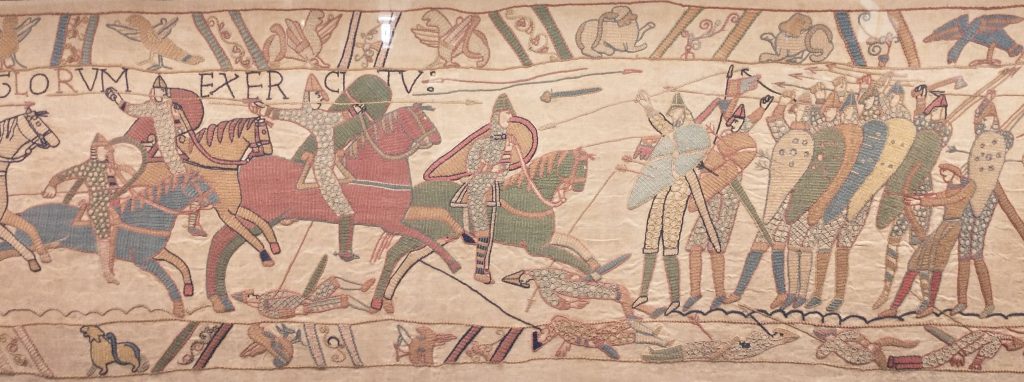
The Archaeological Walk that explores the City of London at the end of the Saxon period and at the beginning of the Norman.
The Norman Conquest of 1066 defines Britain in a way unmatched by any other event. And on this walk we explore the London that William conquered and how he changed England for all time.
London was England’s most important City, but not yet the capital. It was crucial to William in his attempt to conquer the realm. But his army could not fight their way across the heavily defended London Bridge after the defeat of the English King, Harold, at the Battle of Hastings.
The future of England was in the balance as he ravaged the country seeking a way across the river and to persuade the English that resistance was hopeless.
Once across the river, the English leaders sued for peace, and William was crowned at the newly built Westminster Abbey. The English hoped for a strong King who would rule with the people. But William began by building Castles to oppress the Citizens, and soon swept aside the English Aristocracy and establishment and replaced them with the Conquerors.
This was a death blow to Anglo-Saxon culture, but the City made an accommodation with the new regime and the first Lord Mayor of London was an Englishman.
So, on the walk we explore the Late Saxon City of London, and how it changed in 11th and 12th Centuries.
Walk is by Kevin Flude, former Archaeologist at the Museum of London
To Book
Equinox London – Archaeologist-Guided Virtual Tour

London at the Equinox – its calendars, folklore and events associated with the beginning of Spring.
To book
The Decline And Fall Of Roman London Walk
Tobook
An exploration of what happened at the end of the Roman Period, and how the City became deserted, and then, reborn as an English City.
The first British Brexit? The Roman Britons kicked out the Romans in 407AD, and, soon, asked them to come back after a catastrophic collapse. Faced with plague, civil war, invasion, mass immigration, industrial decline, reversion to barter; the authorities struggled against anarchy and descent into a dark age.
But was that how it was? Wasn’t it a rather a transition into the Late Antique period in which life for most people went on much as before except paying taxes to local rulers rather than distant Romans?
The walk investigates why the Roman system in London broke down, and what really was the impact of the end of the Roman system in London? What is the evidence? and can we trust it? Or can we really do nothing much more than guess?
We tramp the streets of London in search of light to shine on the dark age of London.
This is a London Walks event by Kevin Flude, ex Museum of London Archaeology and Museum Curator
Chaucer’s London To Canterbury Virtual Pilgrimage

7.45pm Sat 18th April 2026
A Virtual Walk from Chaucer’s London on pilgrimage along the route of the Canterbury Tales to Canterbury
To book