Gregorius I is known as Saint Gregory the Great. Pope from 3 September 590 to his death on 12th March 604. So 12th March is traditionally his feast day. It was changed to September 3rd, the date of his elevation to Pope because 12th March was often in Lent.
His is the 2nd most popular name for Popes. This is the top 18. I guess St Peter was too hard an act to follow, but then there are only 6 Pauls? I can’t help feeling there should be six Sixtus’s?
- John (23),
- Gregory (16),
- Benedict (16),
- Clement (14),
- Leo (13),
- Innocent (12),
- Pius (12),
- Stephen (9),
- Urban (8),
- Alexander (7),
- Adrian (6),
- Paul (6),
- Sixtus (5),
- Martin (5),
- Nicholas (5),
- Celestine (5),
- Anastasius (4),
- Honorius (4).
- Source: https://conclaveblog.wordpress.com
St Gregory the Great
St Gregory is the patron saint of musicians, singers, students, and teachers. It is traditionally believed he instituted the form of plainsong known as Gregorian Chant. However, he was also a formidable organiser and reformer. He made changes that helped the Catholic tradition survive Arian and Donatist challenges. To read more about the Arian Heresy look at my post on St. Hilary and the Arians. (St Gregory and the Angles – why do these all sound like 80’s post punk bands?)
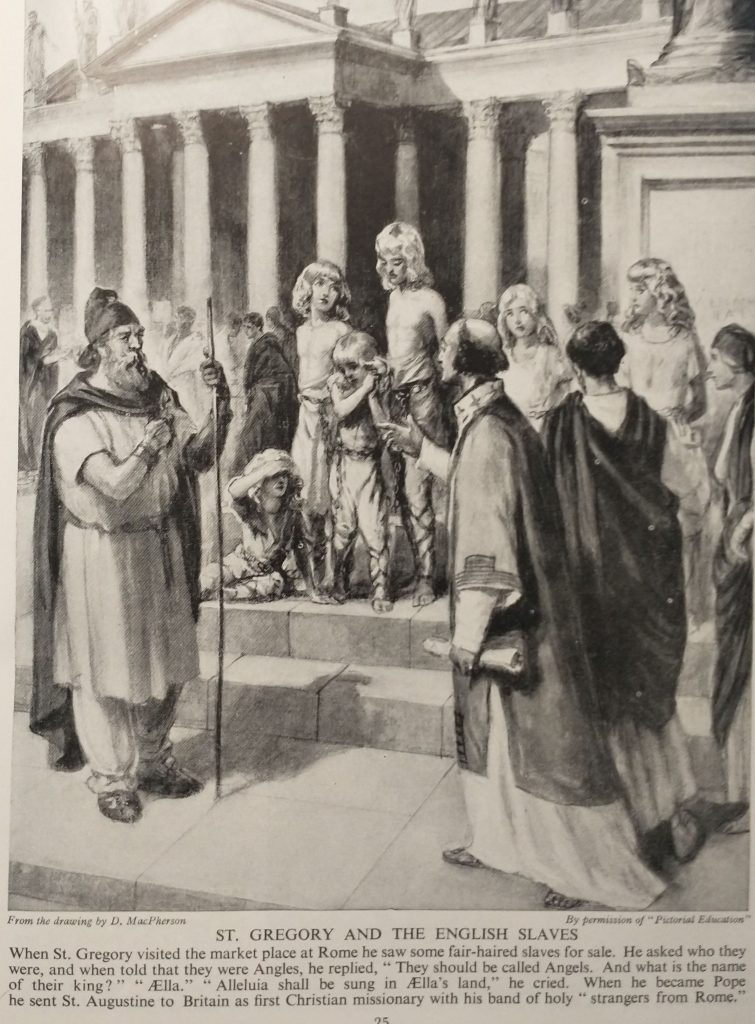
In the UK, St Gregory is venerated with St Augustine for bringing Christianity to the largely pagan Anglo-Saxons. The caption to the illustration above tells the story of how he came to send a mission to the pagan Angles in Briton. It includes his two most famous puns, riffing on the similarity of the words Angles/Angels and Aella/Alleluia. But in between these two he also punned on the name of Aella’s kingdom. This was called Deira which later joined with Bernicia to become the Kingdom of Northumbria. St Gregory said he would save them from the wroth of God which is ‘de ira’ in Latin. The ire of God. Deira. No? Not hitting your funny bone?
St Augustine’s Mission
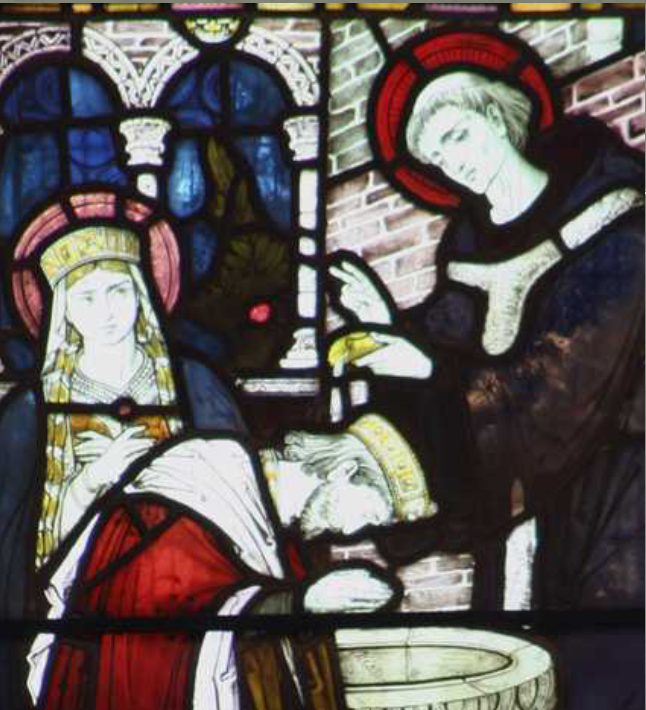
In 597AD St Gregory sent St Augustine to Canterbury. His mission to convert the Germanic peoples of the former Roman Province of Britannia. Canterbury was chosen because its King was the ‘Bretwalda’ of Britain. And he, was married to Bertha, a French Princess who was already a Christian. The enigmatic title of Bretwalda was given to Britain’s most powerful King. At the time, it was Ethelbert of Kent. So, it was a relatively safe haven for St Augustine’s mission. The King was baptised, shortly, after in Canterbury.
Archbishop of London?
The mission came with a plan to recreate the ecclesiastical arrangements set up in the Roman period. From the early 4th Century there were archbishops in the two main capitals at London and York. (We know because they attended the Synod of Arles in 314). After Kent was converted, St Augustine sent St Mellitus to London. London was part of the Kingdom of Essex, ruled by St Ethelbert’s nephew, Sæberht. Mellitus was the first Anglo-Saxon bishop of London and he established St Pauls Cathedral in 604. St Paulinus was sent to convert Northumbria and established a Cathedral in York.
Unfortunately, for the plan, Sæberht died. His sons returned to paganism and Mellitus was kicked out. He returned to Canterbury, where he, eventually, became Archbishop. Ever since we have had an Archbishop of Canterbury and York and never had an Archbishop of London.
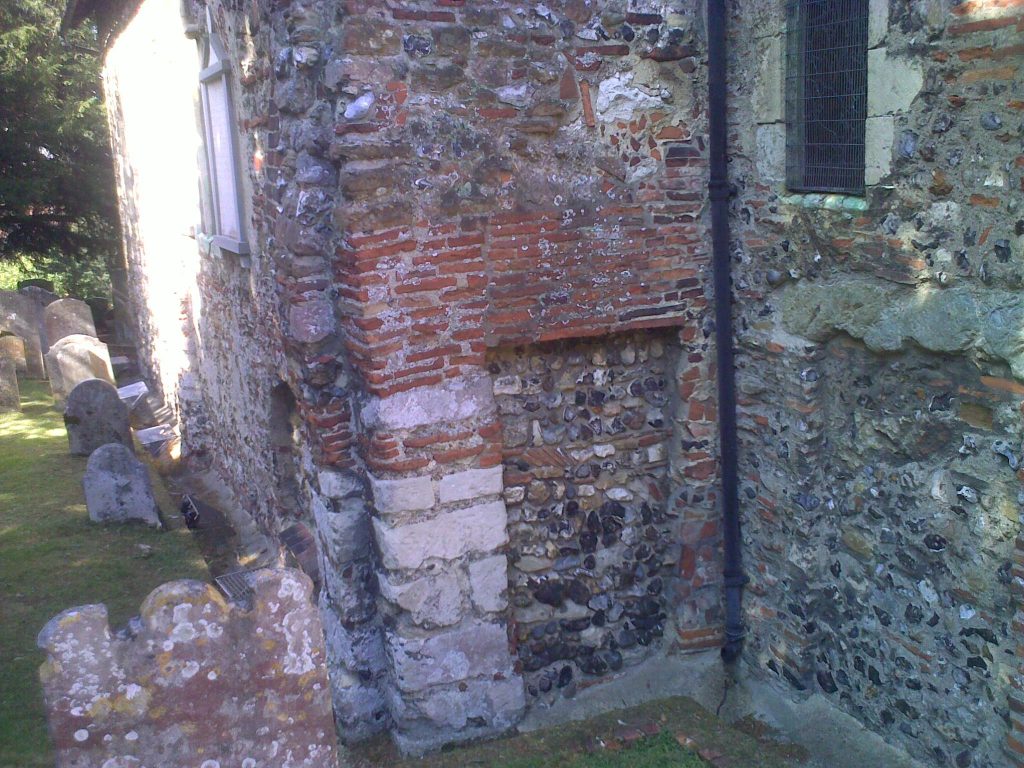
St Gregory and England
It is possible to argue (and I do) that St Gregory’s encounter with the Angles is why we are called English, not Saxons, nor Wessexians. Gregory sent Augustine to set up the Church of the Angles, not the Church of the Saxons. Saxon was the normal name used by the Romans for Germanic barbarians. The old Roman province of Brittania was by now divided into 3 Saxon Kingdoms. Essex, Wessex, and Sussex. (East, West, and South Saxons). 3 Anglian Kingdom, Mercia, East Anglia and Northumbria. (Middle, East and North Angles). And Kent, which the Venerable Bede says was a Jutish King of Germans from Jutland. These Kingdoms were often at war., sometimes allied, or subjected.
The Vikings then conquered most of these Kingdoms, except parts of Wessex and Mercia. After the attacks of the Vikings were beaten back, Alfred and his son, daughter and grandson reconquered or ‘liberated’ the ex-Viking areas. Alfred renamed the united kingdoms of Wessex and Mercia, the Kingdom of the Anglo-saxons. Athelstan his son liberated Northumbria and other areas, and in joining it to the Kingdom of the Anglo-Saxons renamed it Angeland or England.
The Church of England had made the term Anglish/English became a unifying term to unite Angles, Saxons and Jutes. Otherwise, the ‘liberated’ Angles and Jutes would have to swallow being part of Greater Wessex, rubbing in their loss of independence. Of course, it was all a bit more complicated, but it gives a summary of the formation of England, which was created by the end of the 10th Century.
St Gregory in Amsterdam
On a visit to Amsterdam and the Rijksmuseum I came across this painting which features Pope Gregory the Great. He is in the left hand part of the Triptych, shown in green kneeling at the altar. It shows Utrecht in the background.
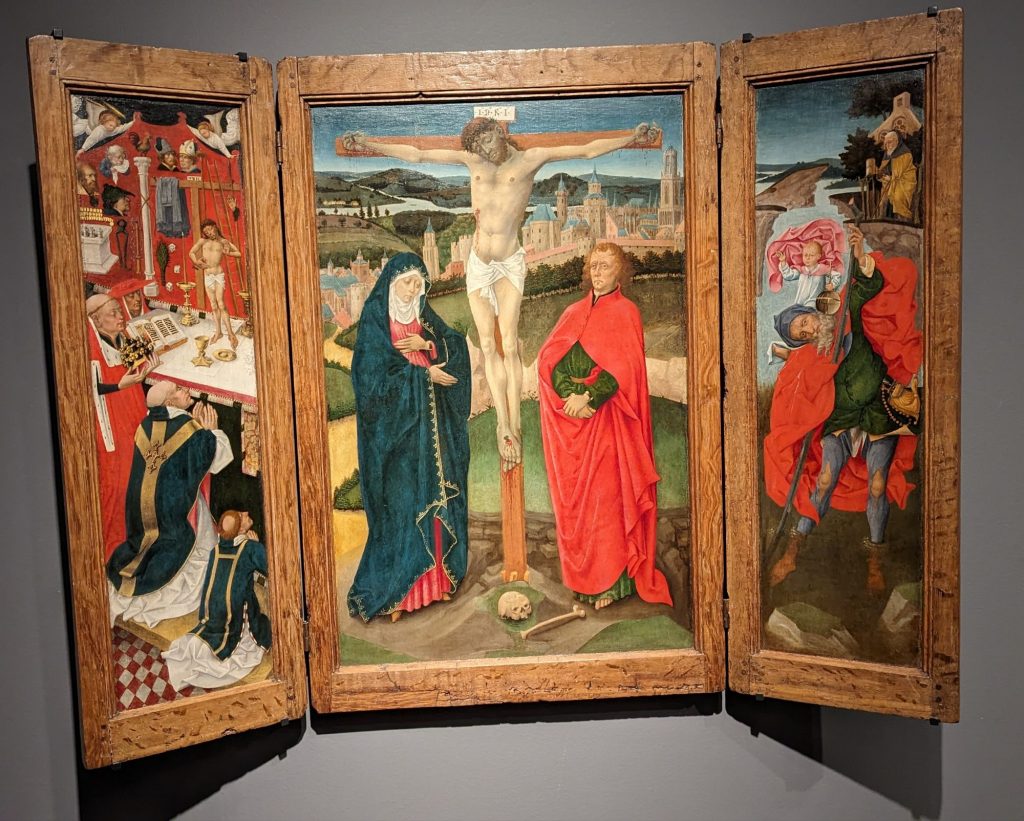
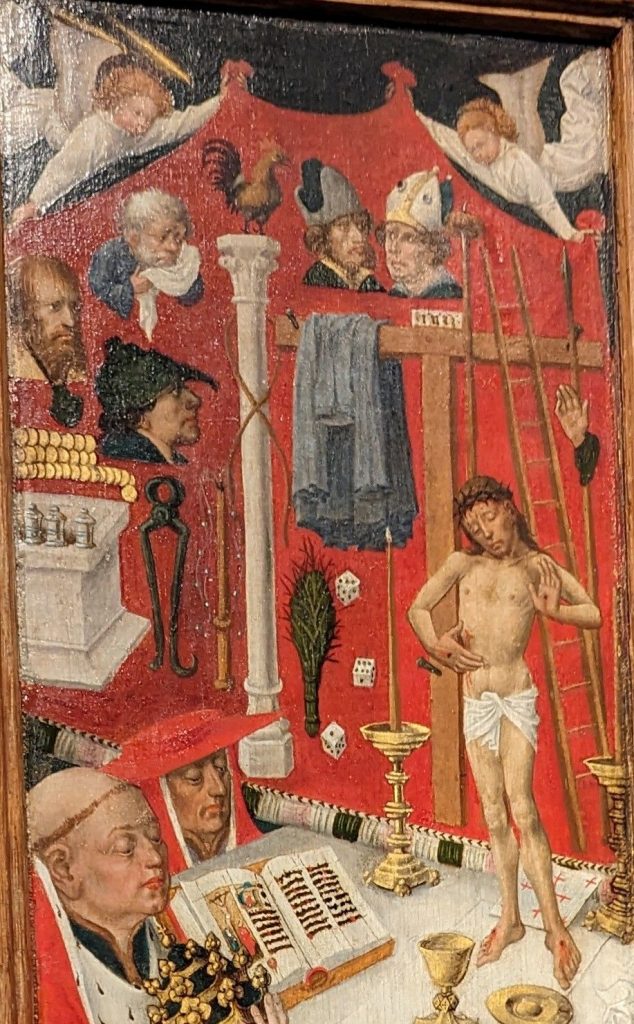
What is fascinating is all the paraphernalia of the Crucifixion above Gregory’s head. You’ll see 30 pieces of silver, dice to decide who gets Jesus’ robes, flails and torture devices, sponge and spear etc. Close up below.
For King Ethelbert’s Feast Day see my post: st-wapburga-and-st-ethelbert-of-kents-day
On This Day
Lazy Day in Anglo-Saxon Times. In the Laws of King Alfred the Great, this day was a day off for freemen. For more on Days off in the Anglo Saxon Calender see my post on August 15th.
1689 – Catholic King James II landed at Kinsale, County Cork, Ireland, in an attempt to regain the Kingdom from his daughter and son-in-law, William and Mary. James had fled to the continent following riots against his rule. William defeated James II at the Battle of the Boyne. James II returned to France never to return. Mary ruled jointly with her husband until she died of Smallpox, and he ruled alone until he fell off his horse.
1930 – Mahatma Gandhi begins the Salt March, a 200-mile march to protest the British monopoly on salt in India. One of the defining moments in non-violent civil disobedience. Offering the world a possible alternative to violent revolution, or military regime change.
1999 – Former Warsaw Pact countries, Czech Republic, Hungary and Poland join NATO. Bulgaria, Estonia, Latvia, Lithuania, Romania, Slovenia and Slovakia joined in March 2004; Croatia and Albania joined on 1 April 2009. Montenegro 2017. North Macedonia. 2020: (Ukraine) can forget about (NATO membership). That’s probably the reason the whole thing (war) started,” said U.S. President Donald Trump on February 26, 2026
First published in 2024, republished in 2025. On This Day added 2026