Ashmolean Advent Calendar, William Burges & the Singing Pierides December 12th

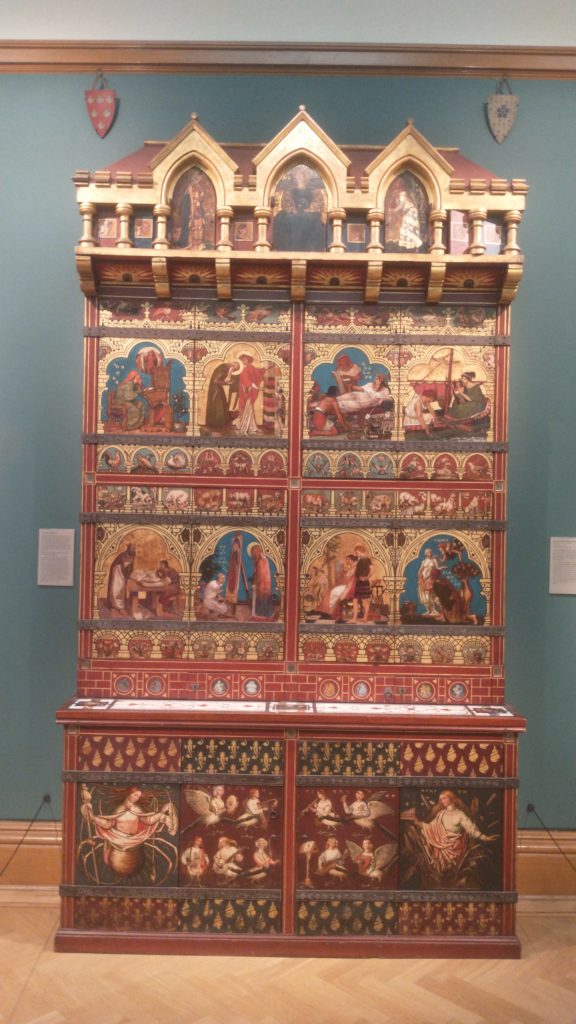
The Great Bookcase by William Burges Ashmolean Museum (Photo K. Flude)

The Ashmolean posts, every year, an online Advent Calendar with gorgeous items behind each ‘flap’. The choice seems to be, mostly, a random selection. But their collection is so wonderful, they are all interesting.

The Great Bookcase by William Burges & the Singing Pierides
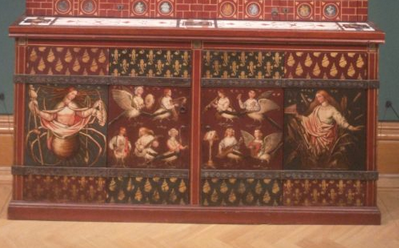
In 2022 The Ashmolean featured the Great Bookcase by William Burges. Burges is one of the great Gothic Revival architects and a designer in the Arts & Crafts Movement with an affinity for Pre-Raphaelite painters. He asked 14 of them to paint panels on his bookcase. The decorative scheme was to represent the Pagan and Christian Arts (Museum label).At the bottom of the Wardrobe are the Singing Pierides painted by Henry Stacy Marks. The Pierides were a sort of classical Greek Von Trapp singers, 9 daughters who foolishly challenged the Muses to a singing competition. Of course, the Goddesses of the Arts — the Muses won., As punishment for their vanity, they turned the Pierides into songbirds. Let this be a warning to all those who overrate their own talents!

‘Whenever the daughters of Pierus began to sing, all creation went dark and no one would give an ear to their choral performance. But when the Muses sang, heaven, the stars, the sea and rivers stood still, while Mount Helicon, beguiled by the pleasure of it all, swelled skywards tilI, by the will of Poseidon, Pegasus checked it by striking the summit with his hoof.

Since these mortals had taken upon themselves to strive with goddesses, the Muses changed them into nine birds. To this day people refer to them as the grebe, the wryneck, the ortolan, the jay, the greenfinch, the goldfinch, the duck, the woodpecker and the dracontis pigeon.’

Antoninus LiberalisMetamorphoses (wikipedia)

Burges & the International Exhibition of 1862
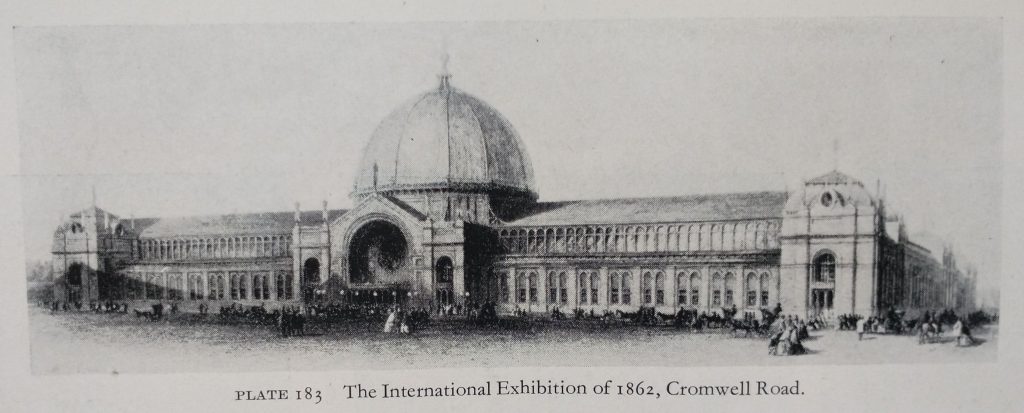
Engraving of the International exhibition of 1862, Cromwell Road
Print of the International Exhibition of 1862, South Kensington

The bookcase by William Burges was originally displayed as the centre point of the ‘Medieval Court’ of the 1862 International Exhibition, South Kensington, London. The Exhibition was almost as successful as the more famous Great Exhibition of 1851. Both got about 6m visitors. The 1862 Exhibition was just south of the site of the 1851 (on the south side of Hyde Park) and in what were then the Royal Horticultural Society’s gardens (now the Science, Natural History Museum, Imperial College etc.)

Raphael

This year, they posted a Raphael drawing of an angle. I show a screen shot below. But to have a real look click here.

The Nuragi

Last year it was a nuragi bronze age stature of a shepherd, a screen shot of which I show below. 2023 December 12th’s choice was a netsuke.
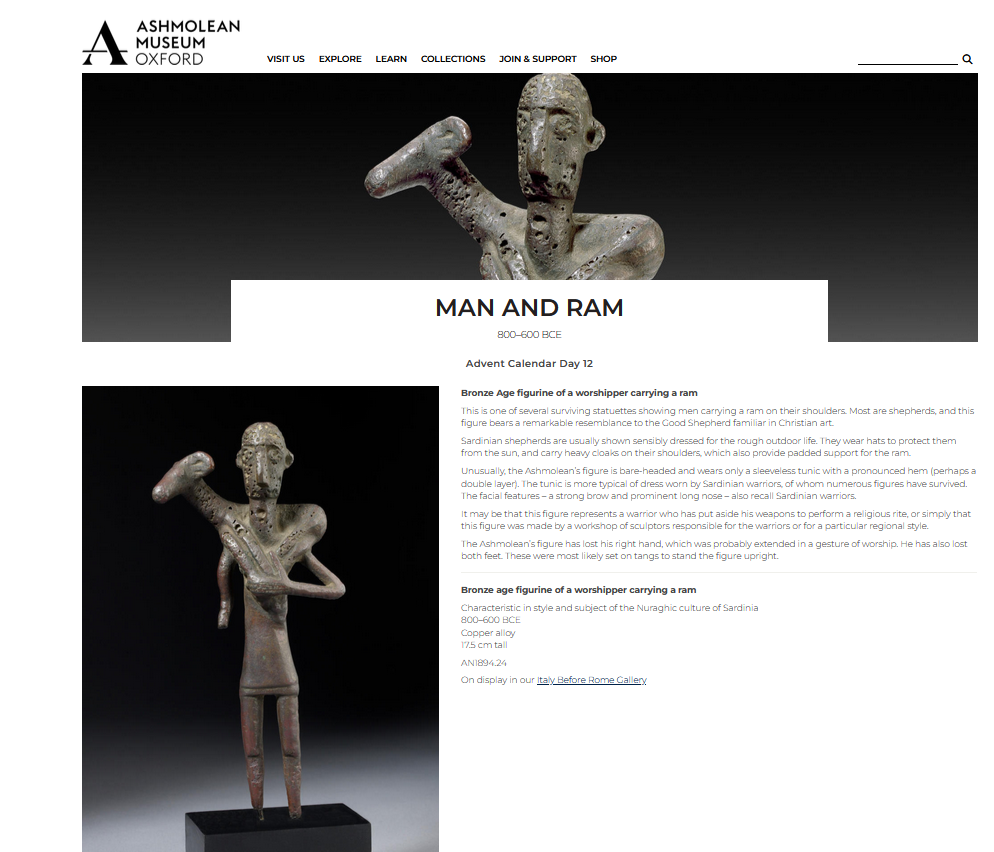
Nuragi statue of a Shepberd

I discovered the Nuragi on a University Field trip, with my students, to the Capital of Sardinia, Cagliari. The Nuragic culture is not well known. However they have amazing Bronze sculptures which give the viewer a really vivid view of their lives and fashions in the Bronze Age. They lived in round towers called nuraghe, which are a little like the Brochs of Scotland. They were around during the time of the Mycenaean Culture in Greece. But their origins and indeed their history are argued about. They may be part of the ‘Sea People’ who brought the end to the Bronze Age cultures of the Eastern Mediterranean, or they may not.

Here, in Britain, the Bronze Age is dominated by discussions of henges, barrows, metal axes and swords. But with very little sense of what life was like to live in those days. However, go to the Cagliari Museum, look at these wonderful statues, and it becomes possible to picture the people. Particularly with a copy of ‘Il Popolo di Bronzo’ by Angela Demontis to hand. It is a catalogue of Nuragi statures with interpretative drawings. It really brings the people to life depicted in the statues. They are mostly warriors, but also there are ‘normal trades’ such as shepherds and bakers which are depicted as well.

Here is my slight adaption of one of the drawings. It is of a shepherd similar to the one photo’d above.
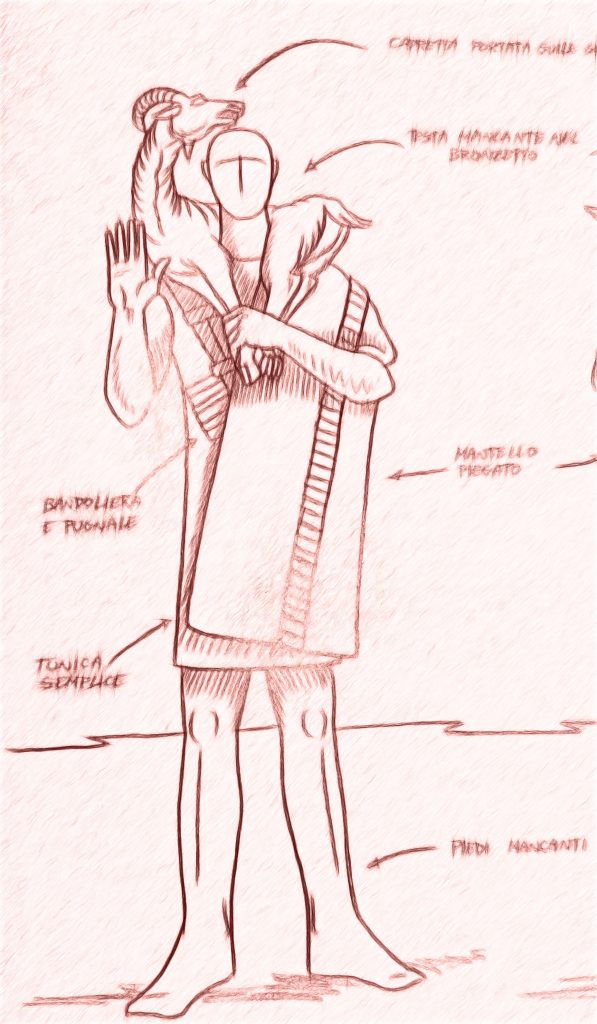
A sketch drawing of a Nuragi sculpture derived from ‘Il Popolo di bronzo’ by Angela Demontis

What you can see is some detail of the clothes and the knife belt around the torso. Not to mention the sheep around his neck! The drawing brings a living person from the Bronze Age before you, not just a lump of bronze. Wikipedia has a long article on the nuragic culture. You can see a wonderful collection of nuragi bronzes and their homes on this website.here.

Originally written for December 12, 2022, revised and republished December 2023, and the Nuragi added in 2024 and Raphael added in 2025
Remember, Remember, the 5th of November

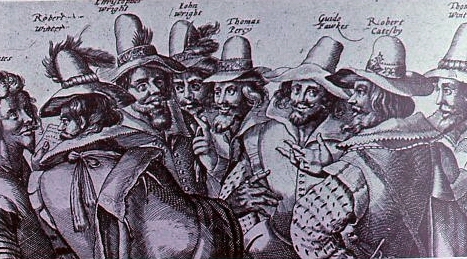
Old print showing the plotters for the Gunpowder plot
The Gunpowder Plotters, culminating on the 5th of November

Soon, after the discovery of the Gunpowder Plot, Parliament legislated for an annual commemoration of the Catholic Plot. The date they chose was the anniversary of finding Guy Fawkes with a lantern next to piles of barrels of Gunpowder underneath Parliament. This was the occasion of the State Opening of Parliament, 5th November 1605. The King, his Queen, the King’s children. The Lords from the House of Lords & MPs from the House of C would all have been blown up.

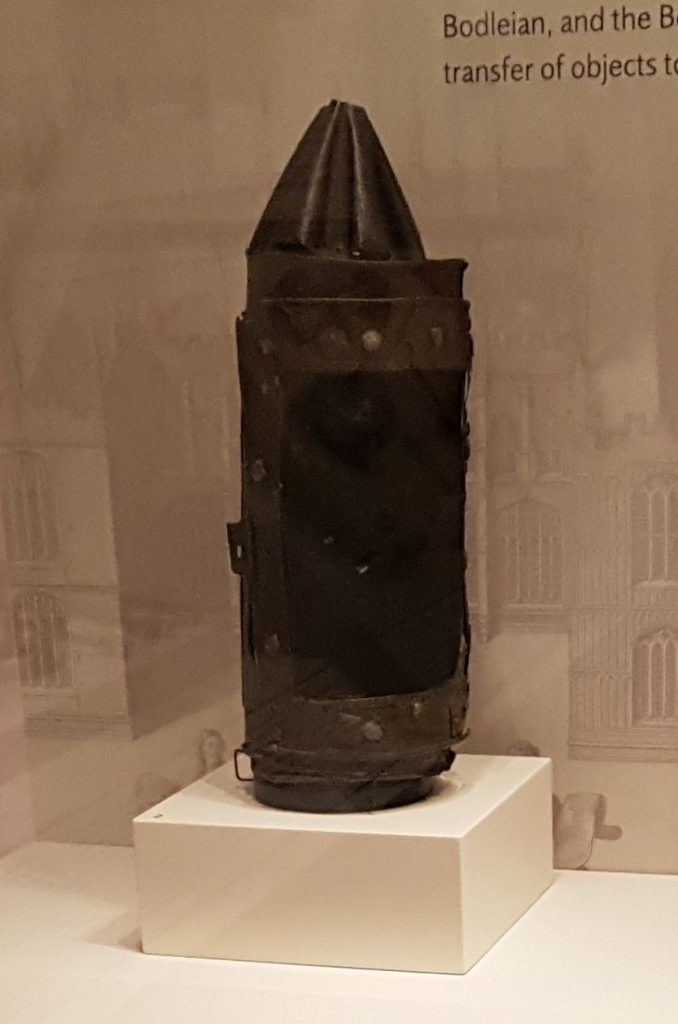
The Ashmolean Lantern

Guy Fawkes Lantern at the Ashmolean Museum

This was the one held by Fawkes. It was given the Museum by Robert Heywood in 1641. He got it from his brother, Peter, who was a Westminster Magistrate among the party who arrested Guy Fawkes in the cellar. Peter Heywood, took the lantern from Guy Fawkes to stop him setting fire to the pile of gunpowder barrels. Or at least that is the story Robert Heywood told.

A commemoration of fireworks and bonfires was clearly appropriate given that it has been estimated that the amount of gunpowder in the barrels would have killed the king, the Royal Family, the House of Lords and the House of Commons and devastated a huge area around Westminster. But some suggest that the nature of the commemoration draws some elements from Halloween – use of bonfires and dressing up. Halloween was frowned upon by puritans, but they supported Guy Fawkes Day as it was anti-catholic.

Banner in Lewes

The anti-catholic nature of the celebration is a fact, but it really isn’t something we think about today. There is little anti-Catholic prejudice in Britain (except in one or two very specific places). Irish friends are amazed we still celebrate it, but for the vast majority of people in Britain it is really just Fireworks night, nothing to do with anti-catholic sentiment.

The Lewes Bonfire

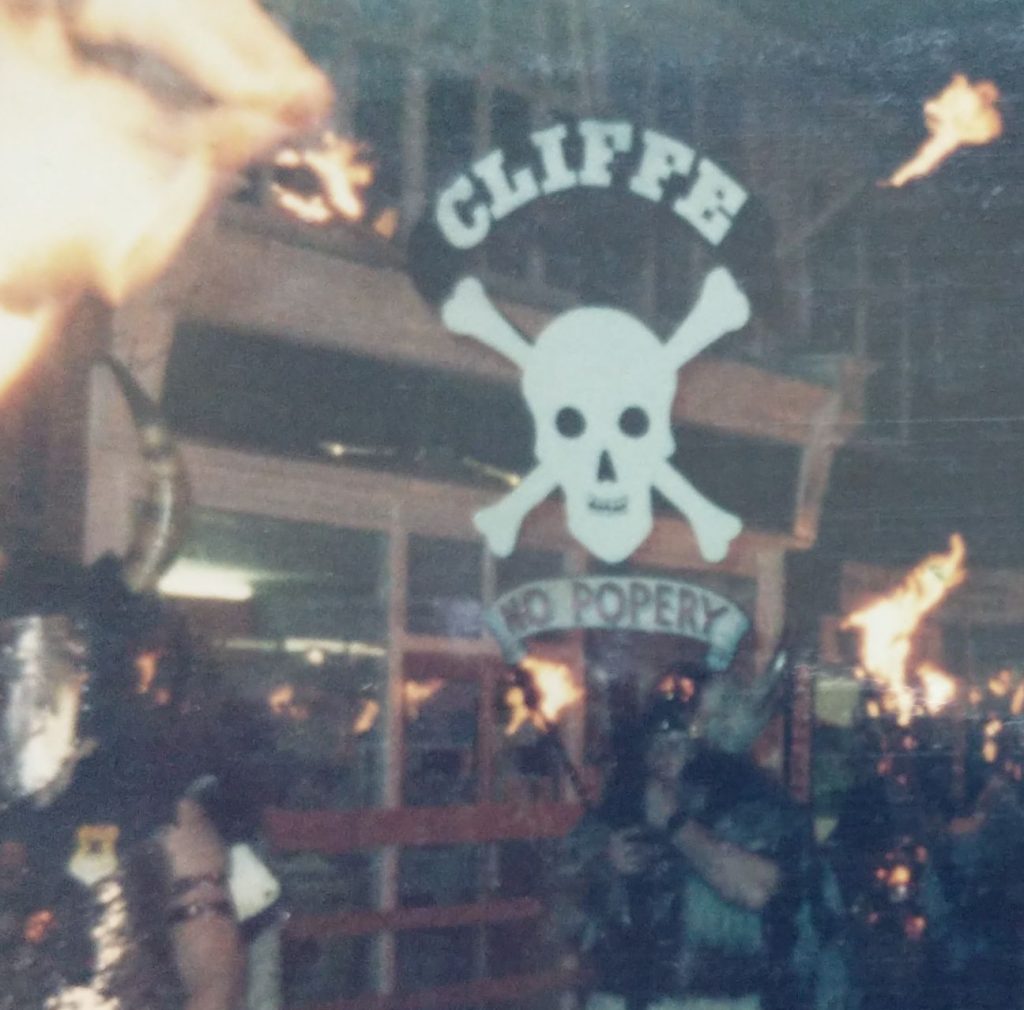
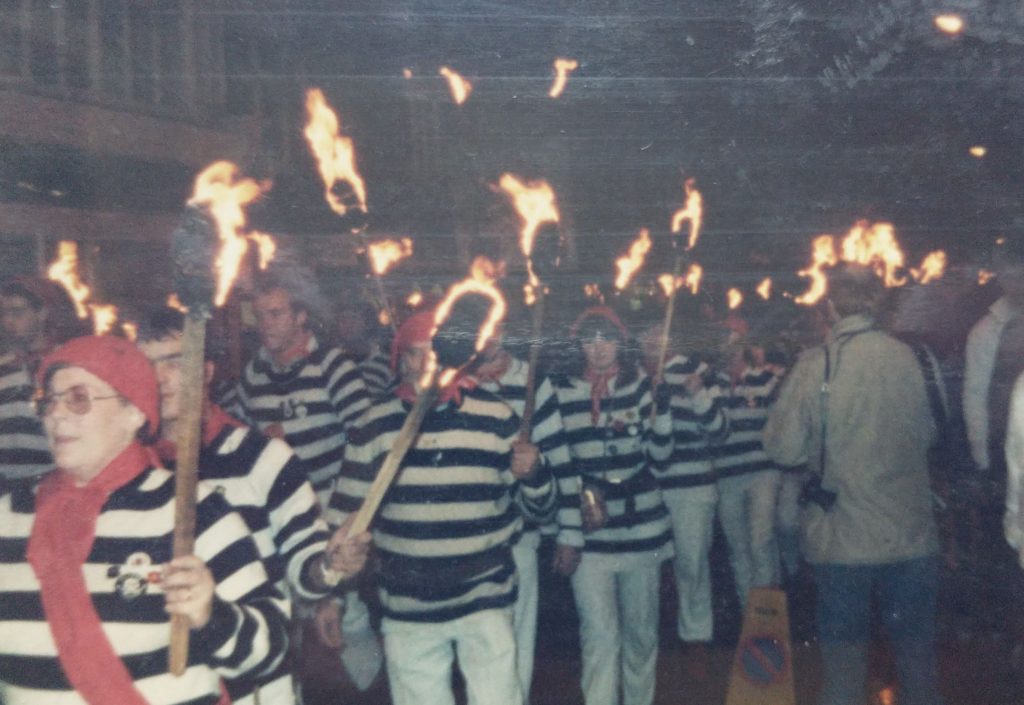
Traces of the original anti-catholic nature of it do continue in places like Lewes, which is one of the most traditional Fireworks Nights. This consists of clubs who organise a parade through the town. Then it ends with the burning of an effigy of the Pope and, more recently, other unpopular figures on the contemporary scene. Click here for more on Lewes.

Procession in Lewes

Tar Barrel Rolling

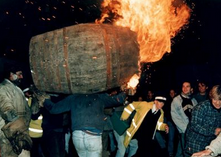
Ottery St Mary continues the tradition of using Tar Barrels. These are wooden barrels in which tar and tinder are set on fire. The Barrels are either rolled through the Town, or down a hill. But in Ottery they are carried on the shoulders of volunteers (see video below). This has a pedigree which goes back before 1605 as there are references to tar barrels and displays in Protestant processions to celebrate the accession to the throne of Edward VI and Elizabeth 1.

Tar Barrels in Ottery St Mary
Stephen and Claire – 2 Zany Brits on YouTube

Discovering the Plot

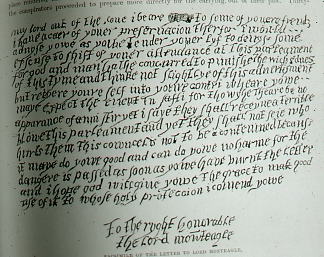
King James 1 took credit for discovering the plot as he is said to have deciphered the warning given in a letter, written to William Parker, 13th Baron Morley, 4th Baron Monteagle. Monteagle wrote the letter at his house in Hoxton, London (commemorated by a plaque in Hoxton Street near where I live) which warned against turning up at Parliament but was not explicit as to the nature of the threat.

Letter Lord Monteagle passed on to King James 1

My lord, out of the love I beare to some of youere frends, I have a care of youre preservacion, therefore I would aduyse you as you tender your life to devise some excuse to shift youer attendance at this parliament, for God and man hath concurred to punishe the wickedness of this tyme, and thinke not slightly of this advertisement, but retire yourself into your country, where you may expect the event in safety, for though there be no apparance of anni stir, yet I saye they shall receive a terrible blow this parliament and yet they shall not seie who hurts them this cowncel is not to be contemned because it may do yowe good and can do yowe no harme for the dangere is passed as soon as yowe have burnt the letter and i hope God will give yowe the grace to mak good use of it to whose holy proteccion i comend yowe.

National Archives

James realised this sentence: ‘they shall receive a terrible blow this parliament and yet they shall not seie who hurts them ‘ implied an explosion. His father, Lord Darnley, was killed in a Gunpowder Plot in Edinburgh, so perhaps he was particularly attuned to the threat. On the other hand, there is a possibility that the King’s Secret Service were aware of the plot and arranged matters, so the King could receive the credit for its discovery.

The Fifth of November

    Remember, remember!
    The fifth of November,
    The Gunpowder treason and plot;
    I know of no reason
    Why the Gunpowder treason
    Should ever be forgot!
    Guy Fawkes and his companions
    Did the scheme contrive,
    To blow the King and Parliament
    All up alive.
    Threescore barrels, laid below,
    To prove old England’s overthrow.
    But, by God’s providence, him they catch,
    With a dark lantern, lighting a match!
    A stick and a stake
    For King James’s sake!
    If you won’t give me one,
    I’ll take two,
    The better for me,
    And the worse for you.
    A rope, a rope, to hang the Pope,
    A penn’orth of cheese to choke him,
    A pint of beer to wash it down,
    And a jolly good fire to burn him.
    Holloa, boys! holloa, boys! make the bells ring!
    Holloa, boys! holloa boys! God save the King!
    Hip, hip, hooor-r-r-ray!

English Folk Verse (c.1870)

See my post on preparing for Guys Fawkes day here:

First published 5th November 2021, revised 2024, 2025