London Bridge to Bermondsey 11am Sun 8th Feb 26 To book
Roman London – Literary & Archaeology Walk 2.15pm Feb 8th 26 To book
The Rebirth Of Saxon London Archaeology Walk 11am Sun 22nd Feb 26 To book
Jane Austen’s London Walk 2.15pm Sun 22nd Feb 26 To book
London Before London – Prehistoric London Virtual Walk 7:30pm Mon 23rd Feb26 To book
London. 1066 and All That Walk 11.30am Sun 8th March 2026 To book
Tudor London – The City of Wolf Hall 2.30 8th March 2026 Barbican Underground Station To book
The Spring Equinox London Virtual Tour 7.30pm Fri 20th March26 To book
The Decline And Fall Of Roman London Walk 11.30 Sat 21st March26 To book
The London Equinox and Solstice Walk 2:30pm Sat 21st March26 To book
Roman London – Literary & Archaeology Walk 11.15pm Sun April 5th 2026 To book
Samuel Pepys’ London – Bloody, Flaming, Poxy London 2:15pm Sun 5th April 26 To book
Chaucer’s Medieval London Guided Walk 11.00am Sat 18th April 2026 To book
Chaucer’s London To Canterbury Virtual Pilgrimage 7.45pm Sat 18th April 26 To book
Jane Austen’s London Walk 11.00am Sun 19th April 26 To book
Myths, Legends, Archaeology, and the Origins of London 11:15am Sat 2nd May 26 to Book
For a complete list of my guided walks for London Walks in 2025 look here
St Agatha Feast Day February 5th
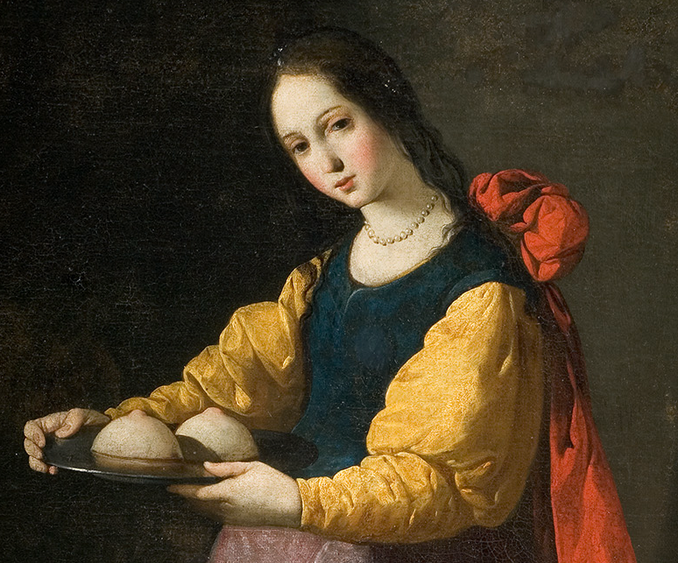
She is a Sicilian Saint, who refused to sleep with a powerful Roman (Quintianus) in the third Century. St Agatha was imprisoned, tortured, had her breasts pincered off, and still refused to sleep with him and died in prison. She is remembered in Sicily by cakes shaped as breasts eaten on her feast day (I kid you not).

St Agatha Patronage
Her patronage springs from the usual mixture of deep and simplistic identifications. So she is ‘the patron saint of rape victims, breast cancer patients, martyrs, wet nurses, bell-founders, and bakers.’ As she is from Sicily ‘she is invoked against eruptions of Mount Etna.’ And therefore also against fire and earthquakes.’ (Wikipedia).
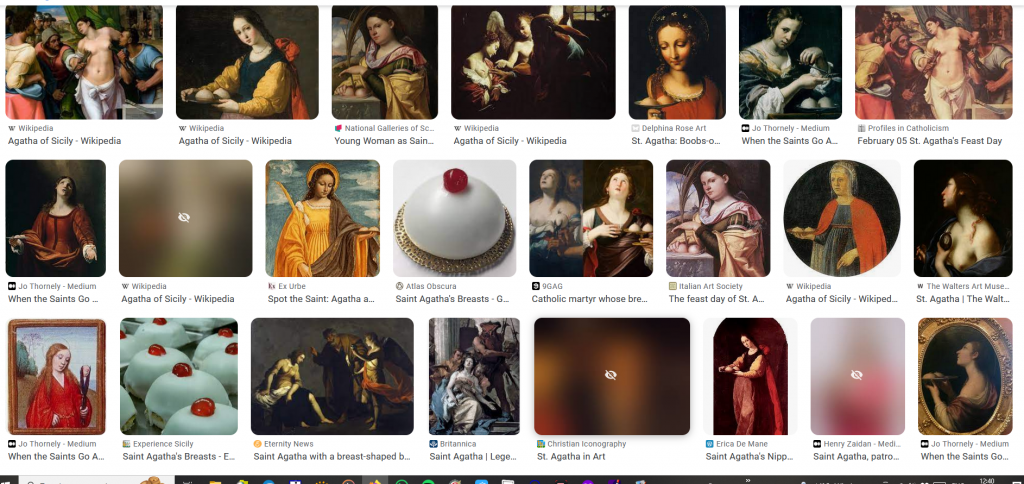
Bell Founders and Bakers? So, the bakers and bell founders, it is suggested, may have mistaken the trays of breasts as bells or loaves? Unlikely in my opinion, as Google image search shows they look clearly like breasts. They are cakes, of course, so that can help explain the Bakers, but the Bell Founders?
She was martyred, at the age of 20 (231-251AD), in the last year of the reign of Emperor Decius (Emperor 249 to June 251 AD). Thus, she is an early martyr whose cult was established in antiquity. But many of the details of her life and death are, as usual, apocryphal and from later traditions.
St Agatha and Etna
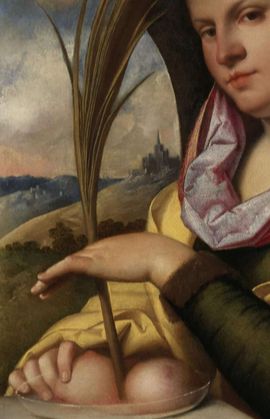
A year after her death, Mount Etna erupted. According to the story, the Christians of her home town of Catania lifted the Martyr’s veil towards the flowing lava. And the City was saved as the lava flow stopped. Hence, she protects against eruptions and by extension, earthquakes, and fire. This part of the story I got from my friend Derek who sent me the link to a piece written by Father Patrick van der Vorst. This also has the full image of the detail of painting by Cariani I show here.
For an explanation of gory matrydom’s please read my post on St Blaise.
For more on St Agatha, Ravenna, and a story about my motorcycling days please look at this post.
On This Day
2 BC – Caesar Augustus is granted the title Father of the Country (pater patriae) by the Roman Senate. Ovid celebrated this day in his alamanac poet Fasti. He seems to be praising Augustus mentioning him with the divine Julius Caesar, and Romulus and Reamus, founders of Rome.
Book II: February 5: Nones
Now I wish for a thousand tongues, and that spirit
Of yours, Homer, you who celebrated Achilles,
While I sing the sacred Nones in alternating verse.
This is the greatest honour granted to the calendar.
My wit deserts me: the burden ís beyond my strength,
This special day above all I am to sing.
Why did I wish, foolishly, to lay so great a task
On elegiac verse? This was a theme for the heroic stanza.
Sacred Father of the Country, this title has been conferred
On you, by the senate, the people, and by us, the knights.
Events had already granted it. Tardily you received
Your true title, you’d long been Father of the World.
You have on earth the name that Jupiter owns to
In high heaven: you are father of men, he of gods.
Romulus, give way: Caesar by his care makes your walls
Mighty: you made such as Remus could leap across.
Tatius, and the little towns of Cures and Caenina,
Knew you: under this Leader all the sun sees is Roman.
But suddenly the verse turns dark, and the references to Augustus are now slights and accusations. He continues:
You owned a little patch of conquered land:
Caesar possesses all beneath Jupiter’s heavens.
You raped married women: under Caesar they are ordered
To be chaste: you permitted the guilty your grove: he
forbids them.
Force was acceptable to you: under Caesar the laws
flourish.
You had the title Master: he bears the name of Prince.
Remus accused you, while he pardons his enemies.
Your father deified you: he deified his father.
Already Aquarius shows himself to the waist,
And pours the gods flowing nectar mixed with water,
And you who shrink from the north wind, be pleased,
A softer breeze is blowing from the West.
Ovid only finished the first 5 chapters of his calendar poem. He was exiled from Rome by Augustus, we don’t know why. But perhaps this is why he was exiled, because he was willing to defame the Godly Tyrant, Augustus, who had destroyed the Roman Republic. Dictators demand flattery, not criticism. Ovid paid the price. For more on Ovid’s exile please read my post on his abandonment of the Fasti here.
1811 – The Prince of Wales appointed Prince Regent during his dad’s, George III, mental incapacity
1924 – The famous pips, the time signal, first broadcasted by the BBC from Greenwich
1953 – Last foodstuffs taken off Rationing in the UK. From this day forward, people could eat as many sweets and as much chocolate as they wanted. In the War they were limited to 2oz per person, and post war 6oz per person per week.
1990 – the last pips broadcasted from Greenwich by the BBC, henceforth the BBC generated their own pips.
First published in 2024, and republished in 2025, Ovid section added 2026
John Constable in Bond Street February 4th 1799

‘I am this morning, admitted a student at the Royal Academy; the figure which I drew for admittance was the torso. I‘m now comfortably settled in Cecil Street, Strand number 23. I shall begin painting as soon as I have the loan of a sweet little picture by Jacob Ruysdael to copy. Since I have been in town, I have seen some remarkably fine ones by him. …
Smith’s friend, Clanch has left off painting, at least for the present. His whole time and thoughts are occupied in exhibiting an old, rusty, fusty head with a spike in it, which he declares to be the real embalmed head of Oliver Cromwell. Where he got it, I know not.; ’tis to be seen in Bond Street at half a crown admittance.’
John Constable. Letter to John Dunthorne, 1799.
From ‘A London Year. 365 Days of City Life in Diaries, Journals and Letters’ compiled by Travis Elborough and Nick Rennison.
John Constable in London
Constable would have had a short walk to the Royal Academy (in Piccadilly) from the Strand. As a painter, he subsequently spent his summers painting in Suffolk and his winters in London. When his wife became ill with Tuberculosis, they moved to Brighton. But he continued to return to London. Constable lived in a cottage in Hampstead, and is buried in the family tomb at the bottom of the graveyard of St John-at-Hampstead Church in Hampstead.

I don’t know what the Torso referred to was, but there was (and still is) a fine collection of plaster casts. The students used these for models.


Cromwell’s Head
As to the head, it is a fascinating tale, which I partly tell on my Martyrdom of Charles I post. here: But here is more details, relevant to the Constable quote. At the Restoration of Charles II Cromwell’s body was dug up. Then the head was stuck on a pole on top of Westminster Hall. It blew off probably in 1684. The head was on display at a museum, but then no one knows where it was until, in 1799 the Hughes brothers, bought ‘it’ for £230. It was exhibited in Bond Street. Entrance fee was 2 Shillings and 6p. Constable’s acquaintance Clanch who I think is actually John Cranch was the publicist for the event.
The display was not a success because the provenance was not clear. All Cranch could say was Cromwell’s head was the “the only instance of a head cut off and spiked that had before been embalmed; which is precisely the case with respect to the head in question”. But then Henry Ireton’s was also treated thus, and maybe others. A head is now in Cambridge, Sidney Sussex College, which Cromwell attended.
The Wikipedia page on Cromwell’s Head, here., has a very full description of its travels.
Weather Outlook
Feb fill the dyke
Either black or white
But if with white, ’tis the better to like
If February gives much snow
A fine summer, it doth foreshow.
If in February there fall no rain.
‘Tis neither good for hay nor grain.
From The Perpetual Almanack of Folklore by Charles Kightly
On This Day
211 – Roman Emperor Septimius Severus dies at Eboracum (modern York, England). Leaving two sons, Caracalla and Geta, to dispute the succession. For several years York was the HQ for the Roman Emperor.
1555 – John Rogers, Vicar of the Holy Sepulchre Church in London and translator of the Bible, burned at the stake in Smithfield. The first of over 200 English Protestant martyrs condemned in the reign of Mary I. For more about Smithfield burnings see my post here.
1789 – George Washington unanimously elected as the first President of the United States. A great leader, who freed his slaves after his and his wife’s deaths, but who also evaded the rules against selling slaves. To consider the wrongs and rights of the issue look here.
1838 – ‘I walked with my daughter Charlotte across the Serpentine, much to my child’s delight, although I own I did not like to hear the ice cracking under the weight of thousands’.
John Cam Hobhouse, Diary, 1838. From ‘A London Year. 365 Days of City Life in Diaries, Journals and Letters’ compiled by Travis Elborough and Nick Rennison. See my post on the Great Freeze of 1895 with a picture of skating on the Serpentine.
1992 – Hugo Chávez ousts Venezuelan President Carlos Andrés Pérez in coup.
First Published February 4th 2026
St Blaise Day & The Tadpole Revels February 3rd

The Blessing of St Blaise helps protect the throat. The way it is works is that blessed candles are made into a cross. These are then touched against the throat of the afflicted one. Why? Because a story was told that Blaise, on his way to martyrdom, cured a boy who had a fish bone stuck in his throat. So, he is the patron Saint of Sores Throats.
Blaise is thought to have been an Armenian Bishop of Sebaste, martyred (316AD) in the persecution of the Emperor Licinius.
Sage Advice for Sore Throats:

In the spirit of St Blaise, here is advice for care of your throats.
Sage Tea is said to be excellent for many things, including dental hygiene and alleviating sore throats. The Kalendar of Shepherds tells us how to treat our throats:
Good for the throat honey, sugar, butter with a little salt, liquorice, to sup soft eggs, hyssop, a mean manner of eating and drinking and sugar candy. Evil for the throat: mustard, much lying on the breast, pepper, anger, things roasted, lechery, much working, too much rest, much drink, smoke of incense, old cheese and all sour things are naughty for the throat.
The Kalendar of Shepherds 1604
The Martyrdom of St Blaise

So far, an uplifting, healing story. However, the Medieval Church’s propensity for the gruesome and its peculiar need to allocate a unique method of martyrdom to each early saint leads us to Blaise being pulled apart by wool-combers irons. Then he was beheaded.
Hence, he is also the patron saint of wool-combers, and by extension, sheep. Wikipedia tells me that ‘Combing: was a regular form of torture.
Combing, sometimes known as carding (despite carding being a completely different process) is a sometimes-fatal form of torture in which iron combs designed to prepare wool and other fibres for woollen spinning are used to scrape, tear, and flay the victim’s flesh.
https://en.wikipedia.org/wiki/Combing_(torture)
Gory Martyrdoms Explained?
I am horrified by the goriness of these martyrdoms, and it needs some explanation. If we believe in Richard Dawkins idea of the meme we can find an explanation. Allocating a different and gory death to each and every saint has advantages for the survival of the cult. It brings a uniqueness to the story of the Saint. Particular details of death suggests authenticity. The extreme death creates an example of stoicism in the face of challenge to faith, and provokes empathy and piety. There is, also, we have to accept, a very human attraction in the bloodthirstiness of stories.
But, there is, I suspect, a financial interest too. In order for these cults to survive, they need adherents, acolytes, worshippers, donors, patrons. They require income streams that can help support the expensive clergy and the fabric of the Church or chapel. One source of income is from the wealthy, but in the medieval town, urban wealth was held within the booming guild structure. If the martyred Saint, could attract a particular Guild then (the sponsoring Priests, or Church) were quids in.
Wool was the mainstay of the economy in the medieval period. A martyr like St Blaise would prosper wherever there were people working with wool, cloth or sheep. So, is it too cynical to suggest someone with an eye for the main chance added the detail of the wool combing death to attract donations from rich wool merchants? As a successful meme, it spread throughout Europe.
Also, there were any number of endemic diseases and occupational hazards for which there was no clear cure. So if the Saint can become the Saint of common, preferably chronic, illnesses, he/she can attract all those who suffer from that or similar diseases.
Of course, it may not always be a cynical drive for more income. In exchange, the Church offered the sufferer comfort in the face of suffering. This quality is not only of great use on its own, but it would have maximised the placebo effect. The effect has been scientifically measured. And would often be more effective a cure as than the available, often bizarre, medieval remedies.
Blaise’s hagiography suggests he was a physician. The cult was able to grow into being not only the Saint for Sore Throats and Sheep but one of the go-to saints for diseases in both humans and animals.
For a female tortured Saint see my post of St Margaret of Antioch here.
Blaise in Britain
His cult came to Britain when King Richard I was ship wrecked on Crusade. Richard was helped by Bishop Bernard of Ragusa where Richard was washed up. When the Bishop was deposed he sought sanctuary in Britain and was made Bishop of Carlisle where he promoted the cult of Blaise. Several churches in the UK founded churches named for him.
St Blazey in Cornwall is named after his Church and celebrates him by a procession of a ram and a wicker effigy of the Saint. Milton, in Berkshire, dedicated its Church to St Blaise, probably because the village’s wealth depended on sheep. The village held a feast on the third Sunday after Trinity, and the day after held the Tadpole Revels at Milton Hall. Tadpole is thought to be a corruption from the word ‘Tod’ which means cleaned wool.
Blaise in London
Westminster Abbey has a chapel dedicated to Blaise (see image at top of page). In the Bishop’s Palace at Bromley is St Blaise’s Well. It is thought to have begun as a spring when the Palace ‘was granted to Bishop Eardwulf by King Ethelbert II of Kent around 750 AD.’ A well near the spring became a place of pilgrimage and an Oratory to St Blaise was set up. In the 18th Century, the chalybeate waters of the well were considered to be useful for health. It still exists today.
On February 3rd, St Etheldreda’s Church in London holds the Blessing of the Throats ceremony. It was a Catholic Church in the medieval period, then, in Reformation was used for various purposes until returned to the Catholic Church in 1876. It has memorials for Catholic Martyrs killed in the reign of Queen Elizabeth I
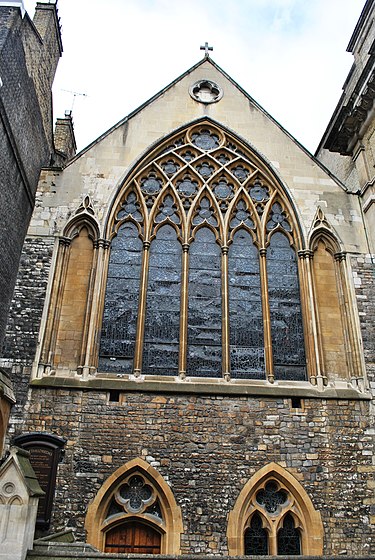
CC BY-SA 4.0 Wikipedia St Etheldreda’s Church
One of London’s oldest guilds is the Worshipful Company of Woolmen, first mentioned in 1180, when fined, for operating without a license, by Richard 1’s dad, Henry II.
Sources: The Perpetual Almanac by Charles Kightly, Woolly Saints, Britannica, Wovember, wikipedia.
On This Day
1637 – Tulip Mania dramatic collapse of the soaring price of Tulip Bulbs within the Dutch Republic.
1761 – At the age of 87 Beau Nash, Master of Ceremonies at Bath died. To see my post on 18th Century Bath please look at March 14th
1870 – The 15th Amendment to the US Constitution was ratified. It prohibits the federal government or any state from denying or abridging a citizen’s right to vote “on account of race, colour, or previous condition of servitude”. What I don’t understand is how this is compatible with all the many ‘abridgements’ of a citizen’s right to vote which seem to flourish. In particular, Gerrymandering. Isn’t it effectively an abridgement of the right to vote, if the electoral districts are so artificially engineered as to make that vote meaningless? Maybe it’s ok if the abridgement is not about race, colour etc.? (OK as in ‘get away with subverting democracy’.
1917 – World War I: The USA enters the War (unrestricted submarine warfare being one of the causes)
1933 – The policy of Lebensraum announced by Adolf Hitler. This might be explained as one powerful country saying it is entitled to take over less powerful countries because they can?
Revised 2025, and 2026
Candlemas February 2nd
Candlemas is an important festival of the Church, celebrated throughout the Christian world. It is the day Jesus was presented to the Temple as a young boy and prophesied to be ‘a light to lighten the Gentiles’. The day is therefore celebrated by lighting candles. Hence its name.
It is also called the Feast of the Purification of the Blessed Virgin Mary. It is 40 days after the birth of Jesus which was fixed as the 25th December by Pope Liberius by AD 354. So it is the end of the postpartum period ‘as the mother’s body, including hormone levels and uterus size, returns to a non-pregnant state’. Mary went to the Temple to be ritually cleansed. This later became known as ‘churching’.
Candlemas a Cross Quarter Day.
It is also one of the cross quarter days of the Celtic tradition, that is halfway between Winter Solstice and May Day. The candles also suggest a light festival marking the lengthening days. It is probably another of those festivals where the Christian Church has taken on aspects of the pagan rituals, so Brigantia’s (celebrated at Imbolc on February 1st) role in fertility is aligned with the Virgin Mary’s.
Weather Lore for Candlemas
Folklore prophecies for today: ‘If it is cold and icy, the worst of the winter is over, if it is clear and fine, the worst of the winter is to come.’ Looking overhead I can see a little blue sky but I can’t say it is ‘clear and fine’. But it is certainly not ‘cold and icy’. So, for what it is worth, we are in for some cold weather.
Candlemas – the Last day of medieval Christmas and the Lords of Misrule.
It’s also the official end of all things Christmas. For most of us Christmas decorations were supposed to be pulled down on January 5th, but, the Church itself puts an end to Christmas officially at Candlemas so Cribs and Nativity tableaux need to be removed today.
John Stow, in the 16th Century describes the period between Halloween and Candlemas as the time when London was ruled by various Lords of Misrule and Boy Bishops (see my post here). In the piece below, Stow also talks about a terrible storm that took place in February 1444.
Against the feast of Christmas every man’s house, as also the parish churches, were decked with holm, ivy, bays, and whatsoever the season of the year afforded to be green. The conduits and standards in the streets were likewise garnished; amongst the which I read, in the year 1444, that by tempest of thunder and lightning, on the 1st of February, at night, Powle’s steeple was fired, but with great labour quenched; and towards the morning of Candlemas day, at the Leaden hall in Cornhill, a standard of tree being set up in midst of the pavement, fast in the ground, nailed full of holm and ivy, for disport of Christmas to the people, was torn up, and cast down by the malignant spirit (as was thought), and the stones of the pavement all about were cast in the streets, and into divers houses, so that the people were sore aghast of the great tempests.’
Robert Herrick has a 17th Century poem about Candlemas:
Ceremony Upon Candlemas Eve
Down with the rosemary, and so
https://www.catholicculture.org
Down with the bays and misletoe;
Down with the holly, ivy, all
Wherewith ye dress’d the Christmas hall;
That so the superstitious find
No one least branch there left behind;
For look, how many leaves there be
Neglected there, maids, trust to me,
So many goblins you shall see.
On This Day
1602 – Twelfth Night by William Shakespeare performed for the first time.
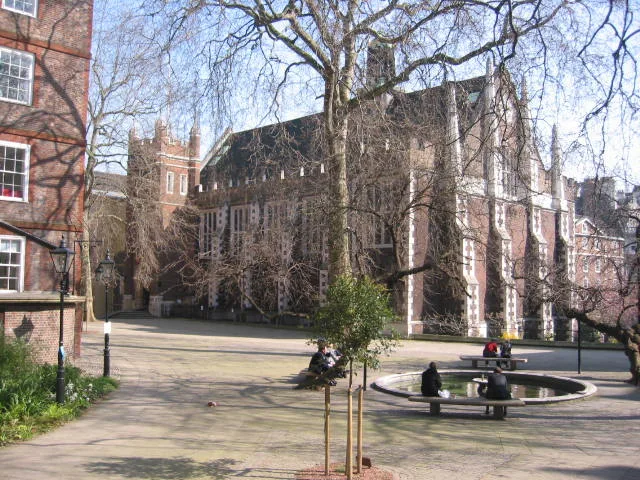
This play was commissioned by the Lawyers of Middle Temple, in Fleet Street London for the end of the Christmas Season. It was written by Shakespeare and first performed in Middle Temple Hall which is still standing. For the folklore of Twelfth Night see my post here.
1880 – First shipment of frozen meat arrives in London from Australia. It was in excellent condition despite a leaving Melbourne in Dec 1879. Hay’s Gallerie in London was one of the world’s first warehouses with refrigeration.
1943 – German Army surrenders ending the Battle of Stalingrad, marking the beginning of the end of the WW2.
Today is Groundhog Day in the USA. This is when the groundhog comes out to see what the weather is like. If it is dull and wet he stays up because winter will be soon over, if it is sunny and bright he goes back to his burrow to hibernate for another 6 weeks. Originally, a German custom associated with the badger. A groundhog is a woodchuck which is a marmot. Does this workas a forecast method? Not being in America I don’t know but what I do know is:
How much wood could a woodchuck chuck
If a woodchuck could chuck wood?
As much wood as a woodchuck could chuck,
If a woodchuck could chuck wood.
https://www.poetryfoundation.org/poems/42904/how-much-wood-could-a-woodchuck-chuck-
First published 2022, revised 2023, 2024, 2025 On This day added February 2026
February – ‘the enemy to pleasure and the time of patience’
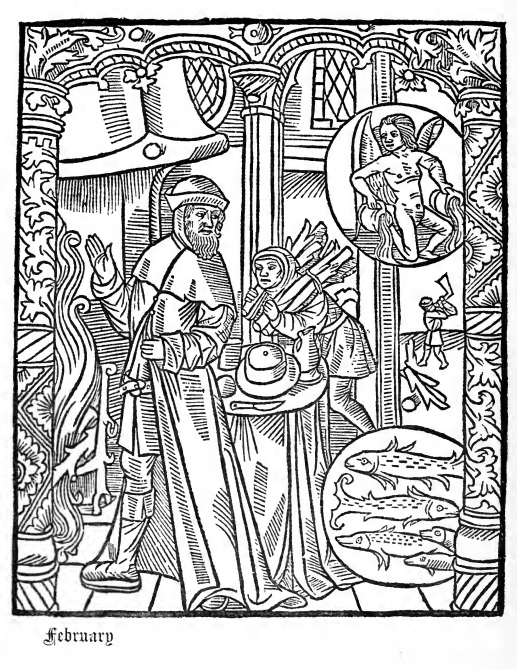
The 15th Century French illustration, above, shows February as a time to cut firewood, dress warmly and stay by the fire. Food on the table is a nutritious pie and the fish are there to remind us it is the month of Pisces. In the other roundel is the other February star sign the Water Carrier, Aquarius.

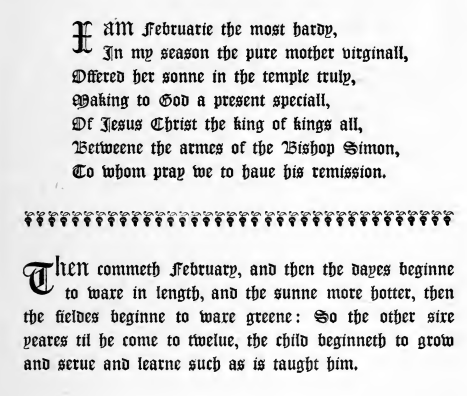
The poem above is a reference to the Candlemas celebration of the presentation of the child Jesus at the Temple. The paragraph below the line (above) gives a summary of February. It ends with the idea that runs through the Kalendar. There are twelve apostles, twelve days of Christmas, twelve months in the year. So, there are twelve blocks of six years in a person’s allotted 72 years of life. In the January entry the Kalendar suggests the essential uselessness of 0-6 year old children. But for February, it allows that 6-12 years old children are beginning to ‘serve and learn’.
The Kalendar’s View of February
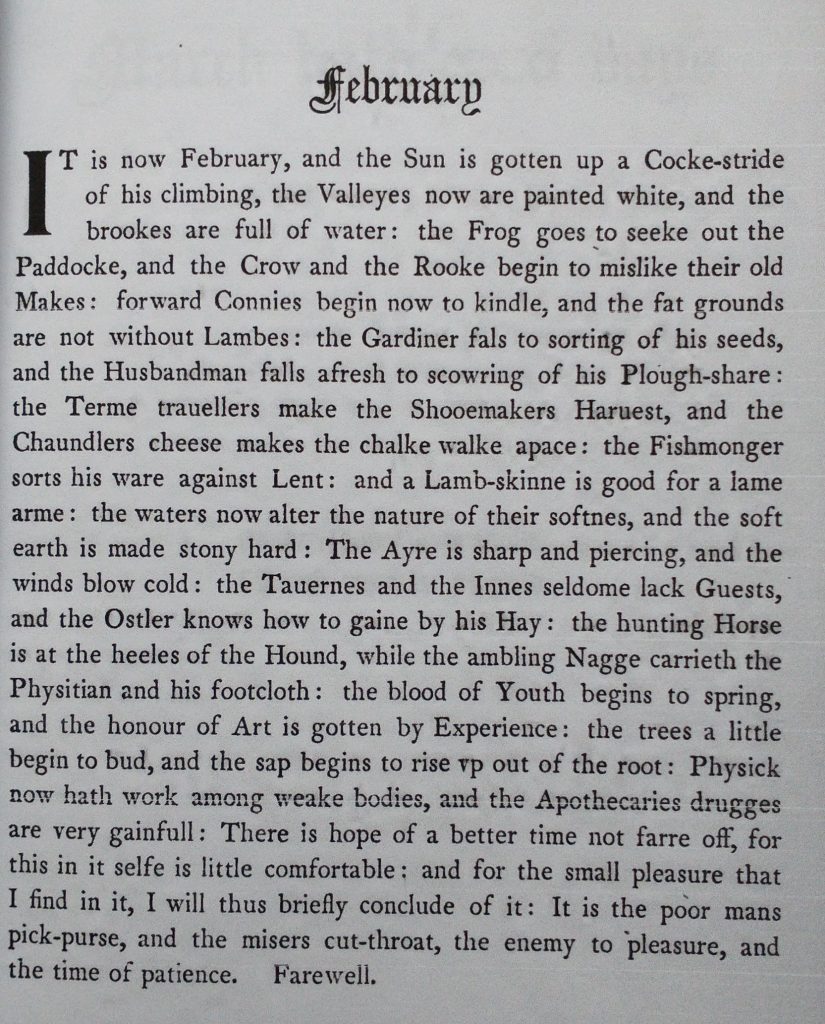
Below, is the text for February. This gives a rural view of life in winter. It ends with the line that February:
‘is the poor man’s pick-purse, the miser’s cut-throat, the enemy to pleasure and the time of patience.’
About the Kalendar of Shepherds.
The Kalendar was printed in 1493 in Paris and provided ‘Devices for the 12 Months.’ The version I’m using is a modern (1908) reconstruction of it. It uses wood cuts from the original 15th Century version and adds various texts from 16th and 17th Century sources. (Couplets by Tusser ‘Five Hundred Parts of Good Husbandrie 1599. Text descriptions of the month from Nicholas Breton’s ‘Fantasticks of 1626.) This provides an interesting view of what was going on in the countryside every month.
For more on the Kalendar look at my post here.
The original Kalendar can be read here: https://wellcomecollection.org/works/f4824s6t
Hesiod and February
Hesiod, in his ‘Works and Days’ describes February as a merciless cold, windy time. Hesiod was writing around 700BC. He gave us ‘the story of Prometheus and Pandora, and the so-called Myth of Five Ages.’ (Links are to Wikipedia.)
Avoid the month Lenaeon, (February) wretched days, all of them fit to skin an ox, and the frosts which are cruel when Boreas blows over the earth.
He blows across horse-breeding Thrace upon the wide sea and stirs it up, while earth and the forest howl.
On many a high-leafed oak and thick pine he falls and brings them to the bounteous earth in mountain glens: then all the immense wood roars and the beasts shudder and put their tails between their legs, even those whose hide is covered with fur; for with his bitter blast he blows even through them, although they are shaggy-breasted.
He goes even through an ox’s hide; it does not stop him. Also he blows through the goat’s fine hair.
But through the fleeces of sheep because their wool is abundant, the keen wind Boreas pierces not at all; but it makes the old man curved as a wheel.
And it does not blow through the tender maiden who stays indoors with her dear mother, unlearned as yet in the works of golden Aphrodite, and who washes her soft body and anoints herself with oil and lies down in an inner room within the house,
on a winter’s day when the Boneless One (an Octopus or a cuttle?) gnaws his foot in his fireless house and wretched home; for the sun shows him no pastures to make for, but goes to and fro over the land and city of dusky men, and shines more sluggishly upon the whole race of the Hellenes.
Then the horned and unhorned denizens of the wood,] with teeth chattering pitifully, flee through the copses and glades, and all, as they seek shelter, have this one care, to gain thick coverts or some hollow rock.
Then, like the Three-legged One (an old man with a stick) whose back is broken and whose head looks down upon the ground, like him, I say, they wander to escape the white snow.
Original text available here. and for more on Hesiod see my post here.
Februarius
The Roman month Februarius was the month of purification. Februa was the name of the purification ritual held on February 15 (full moon) in the old lunar Roman calendar. The Romans originally considered winter a monthless period of the year. So they only had 10 months to the year. Later they added January and February. March was the first month, so September was the 7th month, October the 8th, November 9th and December the 10th and final month. Names derived from the Latin for 7th, 8th, 9th, 10th.
For more on the Roman Calendar look at my posts
https://chr.org.uk/anddidthosefeet/march-1st-the-month-of-new-life/
https://chr.org.uk/anddidthosefeet/leap-day-february-29th/
First Published February 4th 2024, revised 2025, 2026
Annual Grimaldi Memorial Service, All Saints, Haggerston. First Sunday in February

Today, was the Annual Grimaldi Memorial Service in Haggerston, Hackney, London. It began as a memorial service for the famous Regency Clown Joseph Grimaldi. But it has become a service to celebrate Clowns. The service takes place on the first Sunday in February. The service used to be at Holy Trinity Church, but has switched to Haggerston.
Joseph Grimaldi

Grimaldi was born on 18 December 1778. He died in poverty on 31 May 1837. In between, he was the most famous clown. He transformed the Harlequin role and made the white-faced clown the central part of the British Pantomime. The part became known as a Joey after Grimaldi. He performed at the Theatre Royal, Drury Lane, the Sadler’s Wells and Covent Garden theatres.
All Saints Church, Haggerston
All Saints Church, Haggerston is 5 minutes walk from where I live and 2 minutes from where my Dad was born. (see my post here). So I popped in today and took this video. The service, which has been held since the 1940s, attracts clown performers from all over the world who attend the service in full clown costume. The Spitalfield’s Life blog has a very full description of the service, and lots of very good pictures. Follow the link below:
First Published February 1st 2026
Festival of Imbolc, St. Bridget’s Day February 1st

Imbolc and St Bridget’s Day
Today is Imbolc, one of the four Celtic Fire Festivals. It corresponds with St Bridget’s Day, which is a Christian festival for the Irish Saint, and is the eve of Candlemas. Bridget is the patron saint of all things to do with brides, marriage, fertility, and midwifery (amongst many other things, see below). And in Ireland, 2026 was the third St Bridget’s/ Imbolc Day Bank Holiday.
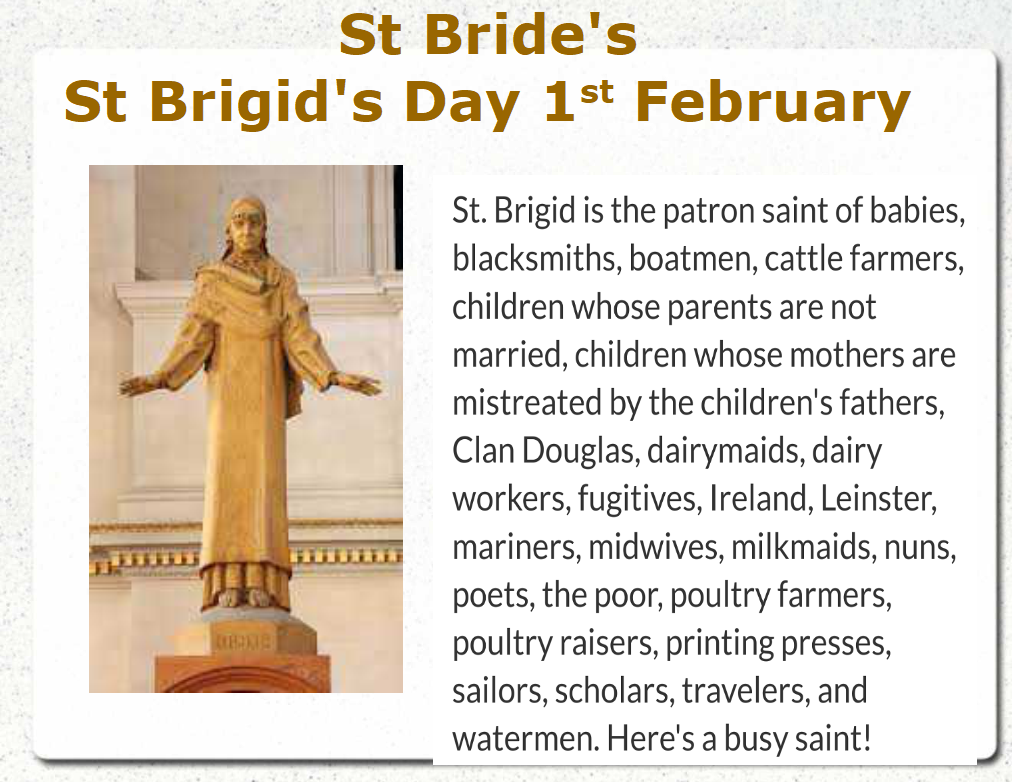
St Bridget, aka Briddy or Bride, converted the Irish to Christianity along with St Patrick in the 5th Century AD. Despite being a Christian, she appears to have taken on the attributes of a Celtic fertility Goddess. Her name was Brigantia, and it is difficult to disentangle the real person from the myth.
Brigantia
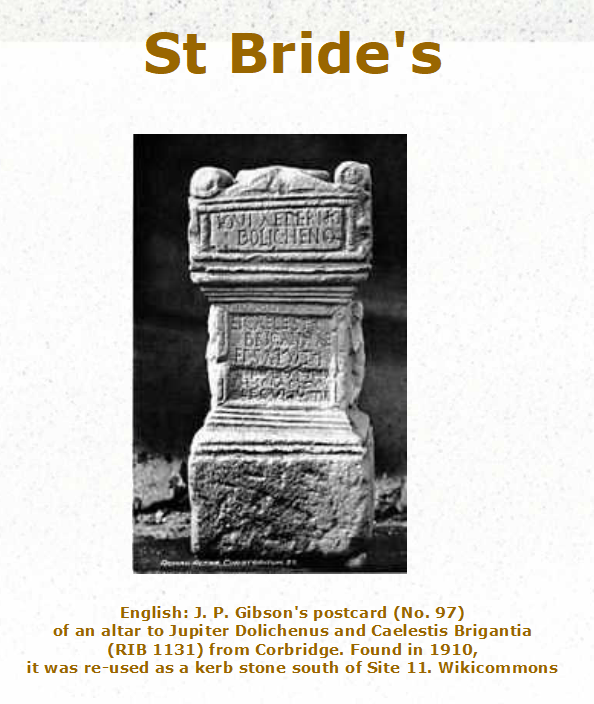
Archaeologists have found various Roman altars dedicated to Brigantia. The Brigantes tribe in the North are named after the Goddess (probably). They were on the front line against the invading Romans in the 1st Century AD, and led by Queen Cartimandua. The Queen tried to keep her tribe’s independence by cooperating with the Romans. A few years later, Boudica took the opposite strategy. But both women had executive power as leaders of their tribes. This suggests a very different attitude to woman to the misogyny of the Romans.
Wells dedicated to St Bridget
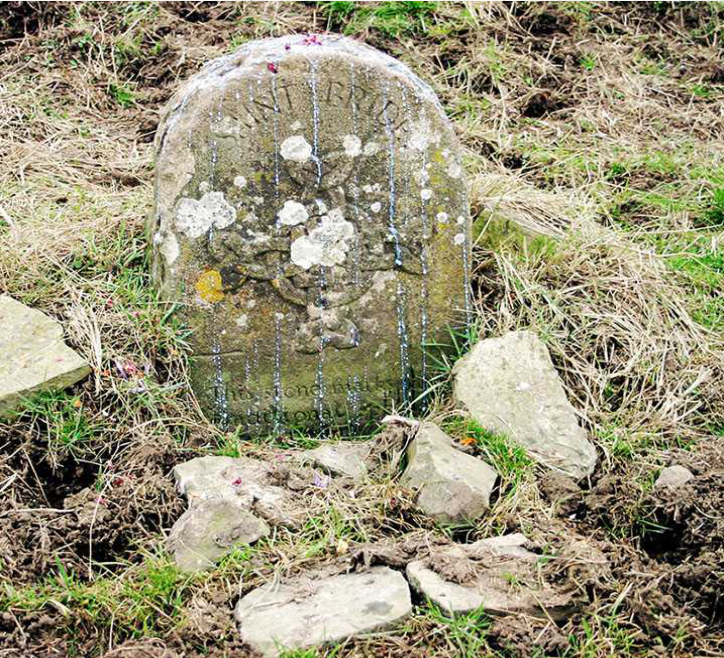
St Bride is honoured by many wells dedicated to her. Often they are associated with rituals and dances concerned with fertility and healthy babies. And perhaps, the most famous, was near Fleet Street. This was Bridewell, which became the name of Henry VIII’s Palace, and later converted into an infamous prison. St Bride’s Church, built near to the Well, has long been a candidate as an early Christian Church. Sadly, the post World War Two excavations found nothing to suggest an early Church. But, they did find an early well near the site of the later altar of the Church, and remains of a Roman building, possibly a mausoleum. Perhaps the Church may have been built on the site of an ancient, arguably holy, well. However, this is only a guess.
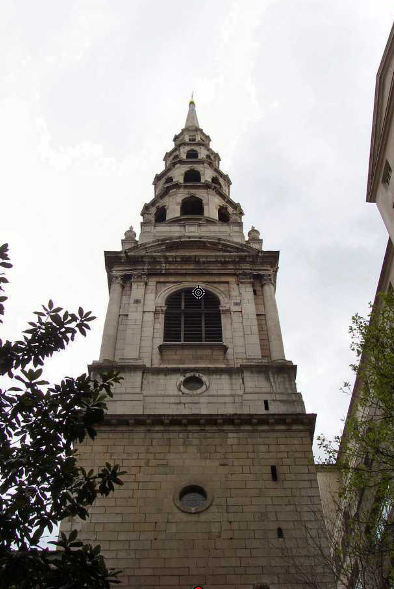
The steeple of St Brides is the origin of the tiered Wedding Cake, which, in 1812, inspired a local baker to bake for his daughter’s wedding.
February signs of life
Imbolc and St Bridget’s Day are the time to celebrate the return of fertility to the earth as spring approaches. In my garden and my local park, the first snowdrops are out. Below the bare earth, there is a frenzy of bulbs and seeds budding, and beginning to poke their shoots up above the earth, ready for the Spring. In the meadows, ewes are lactating, and the first lambs are being born.


Violets, bulbs, and my first Daffodil of the year. Hackney (2022), London by K Flude
And let’s end with the Saint Brigid Hearth Keeper Prayer Courtesy of SaintBrigids.org
Brigid of the Mantle, encompass us,
Lady of the Lambs, protect us,
Keeper of the Hearth, kindle us.
Beneath your mantle, gather us,
And restore us to memory.
Mothers of our mother, Foremothers strong.
Guide our hands in yours,
Remind us how to kindle the hearth.
To keep it bright, to preserve the flame.
Your hands upon ours, Our hands within yours,
To kindle the light, Both day and night.
The Mantle of Brigid about us,
The Memory of Brigid within us,
The Protection of Brigid keeping us
From harm, from ignorance, from heartlessness.
This day and night,
From dawn till dark, From dark till dawn.
For more about go to this webpage St Bridget. To read my post on Mary Musgrove’s Candlemas Letter in Jane Austen’s Persuasion follow this link.
Imbolc and Myths and Legends Walks
I give walks about Imbolc and other Celtic festivals, and at May Eve, the Solstices, Equinoxes, Halloween and Christmas (when I have time). You might like to attend these walks or virtual tours. The following are currently in my calendar. I will be adding other walks to the calendar as the year progresses.
The Spring Equinox London Virtual Tour 7.30pm Fri 20th March26 To book
The London Equinox and Solstice Walk 2:30pm Sat 21st March26 To book
For more of my walks see the walks page of this blog here: https://www.chr.org.uk/anddidthosefeet/walks
First published in 2023, revised and republished Feb 2024, 2025, 2026
British Exceptionalism Brexit Day January 31st

Today is the Anniversary of the day Britain left the European Union in 2020. It is possible to argue the case that one of the reasons so many people were willing to vote to leave the Union was English or British Exceptionalism. I think most people would be thinking of Winston Churchill and World War 2, and the British Empire. But you can argue a case that there has long been important distinctions between Britain and Europe.
I find it amusing that we left Europe at 11pm on January 31st 2020, which was midnight in the European Union. See the BBC round up on Britain and Europe.
This Island Story
When I was at school, there was a lot of emphasis on Great Britain being an Island. This is rarely emphasised in the 21st Century. But it was part of the Imperial story of the British Empire and helped distance ourselves from ‘the Continent’.
That Island story didn’t begin until the Mesolithic period. Before that, Britain was physically part of Europe, and the Thames was but a tributary of the Rhine. Then the land bridge that is now called Doggerland was swept away by rising meltwater. By 8,000 years BP. Britain was an Island.
Around 4000BC, the so-called Neolithic Revolution spread farming throughout Europe. But, the Channel acted as a barrier. So, it took an extra hundred years or so for farming to begin to penetrate Britain. The early farmers brought with them not only the domestic animals, crops, pottery and ground axes but also a new form of housing consisting of long, rectangular wooden houses. The DNA of the people of Britain, was radically changed and the so-called Western Neolithic DNA mostly took over. Strangely, the long house did not survive very long as a popular design. Britain while accepting the new farming technology, seem to have reverted to their own form of housing
Post Roman divergence?
While most major style and technology changes over the next 4 millenia were shared with Europe, Britain often had its own versions. Britain shared with Europe the adoption of the Celtic Languages and eventual integration into the Roman Empire. But, when the western part of the Roman Empire fell in the 5th Century, Britain had a different experience to much of Europe. On the face of it, a similar sequence happened. The Western Empire was taken over by Germanic Kings. The Franks in France and Germany; the Anglo Saxons in England; the Lombards in Italy and Goths, Visigoths, Vandals in Spain (and N. Africa). A similar sequence on the surface.
But on the mainland the German Kings allowed the local cultures to continue and adopted the Latin language, and Christian religion as their own. They maintained a strong tradition of Roman law and culture. French, Italian, Spanish, Rumanian are all romance languages based on Latin.
But across the Channel to England, it was different. Our German Kings didn’t adopt the Latin language and the native Celtic dialects died out (except of course in Cornwall, Wales, Scotland and Ireland ), They also maintained their pagan beliefs. So English culture is Germanic and not Roman. We do not have a foundation in Latin culture and Roman law. This is very different to western Europe.
Napoleon founder of modern Western Europe
Of course the Anglo-Saxons eventually soon adopted Christianity. In the 16th Century Britain turned against the universal Catholic Church. This was a rupture that had a similar impact to Brexit. But the next really significant difference was the changes instituted by Napoleon. He subdued then rationalised and liberalised the continent. He had dreams of a United Europe of Nations (in contrast to the Empires that held sway (such as the Holy Roman Empire, and the Austro-Hungarian Empirehttps://www.napoleon-series.org/research/napoleon/c_unification).
Most legal systems in Europe are based on Roman Law as amended by the Napoleonic code. England by contrast is based on the Common Law.
So these differences combined with our arrogance derived from Empire, the Industrial Revolution and belief we won World War 2. And our cultural pride based on our perception of the preeminence of people such as Shakespeare, Newton and Darwin etc etc). All this probably lay behind ‘British Exceptionalism’. This helped a nationalistic and misguided belief that we are held back by Europe despite all the evidence to the contrary.
And the future?
Opinion polls make it clear that most people think Brexit was a mistake, and they blame it on the Conservatives, Boris Johnson and Nigel Farage. Economists are clear the damage it has done to Britain’s financial position. And yet the main parties have been very reluctant to consider a return to Europe. Instead, Sunak and Starmer have tried to sort problems out on a case by case basis, without suggesting we go back into the European Union.
However, there is a dawning awareness that Europe cannot depend upon the US playing its usual leading role in maintaining the international status quo, and this may accelerate our move back towards Europe. Canadian Prime Minster Carney is proposed the formation of an alternative economic alliance to replace dependence on the US, and this may be our route back into the European Single Market.
Advice for Lambs
From ‘ FIUE HUNDRED POINTES OF GOOD HUSBANDRIE. BY THOMAS TUSSER.
The Edition of 1580 collated with those of 1573 and 1577.
¶ Januaries husbandrie.
Yoong broome or good pasture thy ewes doo require,warme barth and in safetie their lambes doo desire.Looke often well to them, for foxes and dogs,for pits and for brembles, for vermin and hogs.
More daintie the lambe, the more woorth to be sold, the sooner the better for eaw that is old. But if ye doo minde to haue milke of the dame, till Maie doo not seuer the lambe fro the same.
Ewes yeerly by twinning rich maisters doo make, the lamb of such twinners for breeders go take. For twinlings be twiggers, encrease for to bring, though som for their twigging Peccantem may sing.
Note ewes who had twin lambs were thought to be better and fetched more at market. They were called twinlings.
On This Day
1606 – Guy Fawkes and fellow conspirators are hanged, drawn and quartered for plotting to blow up Parliament and King James. See my post on the Gunpowder Plot.
1865 – Congress passes the Thirteenth Amendment to the United States Constitution, abolishing slavery.
1953 – The North Sea Flood assail the east coast of Britain killing 280 people. ‘The combination of wind, high tide, and low pressure caused the sea to flood land up to 5.6 metres (18 ft 4 in) above mean sea level.’ (Wikipedia).
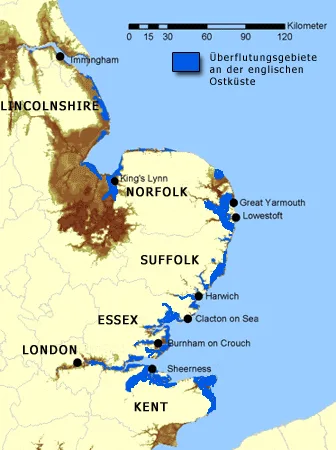
Deutsch: Sturmflut von 1953 Date 25 September 2008 Source: Draco. GNU Free Documentation License
You might like to see some great pictures of the floods here.
First Published 2025, revised and OnThis Day added 2026
The Martyrdom of Charles I & ‘Get Back’ January 30th
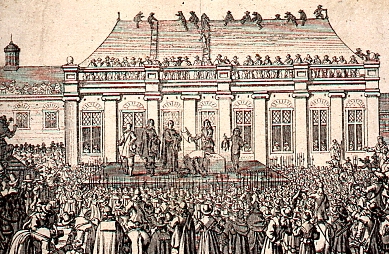
January 30th is the anniversary of the execution of King Charles I. Today, he was beheaded as a murderer and traitor. Or as a Royalist would see it, it is the anniversary of the Martyrdom of Charles I.
Thousands came to see the execution, amongst them Samuel Pepys. They crowded around the scaffold outside a window of Inigo Jones’s magnificent Banqueting Hall, in Whitehall, London. Charles was brought into the Banqueting House. There he must have looked up at the magnificent Peter Paul Reubens’ ceiling. Charles had commissioned the painting to depict of the Apotheosis of his father, James I. It was the symbol of the Divine Right of the King to rule.
Scaffold to Heaven?
I doubt he saw the irony. I suspect he thought he was going to heaven to join his father, in glory as a Martyr to his religion. He walked outside, through the window, into the cold January air. Two of his bloodstained shirts still exist, probably to stop him shivering. He wanted to be seen as going fearless to his death not shivering with fear. Then, he made a short speech exonerating himself. He spoke without stammering for the first time in his public life. The Rooftops around were lined with spectators. Black cloth framed the scaffold. As the executioner axe fell, there was a dull grown from the crowd (most could not see the axe falling).
This was on January 30th, 1648. But, if you look at a history book, it will tell you it was in 1649. This was before our conversation to the Gregorian calendar. Then the year number changed not as we do on January 1st but on March 25th. This was the day the Archangel Gabriel revealed to the Virgin Mary that she was pregnant. For more on the importance of March 25th look at my Almanac entry here:
‘Oh the stupendous, and inscrutable Judgements of God’
On the same day, twelve years later, in 1661 Oliver Cromwell and his chief henchmen were dug up from their splendid Westminster Abbey tombs. Their bodies were abused by official command. Cromwell’s head was stuck on the top of Westminster Hall. There it remained until blown off in the Great Fire of 1703 (or 1672, or 1684). Then, it taken to Cambridge, Sidney Sussex College, which Cromwell attended. Only the Head Porter knew where. (According to someone who came on my Oliver Cromwell Walk last year.) Whether it is his head or not is disputed. The tale of the head is told in detail here.
The Royalist, John Evelyn, said in his diary:
This day (oh the stupendous, and inscrutable Judgements of God) were the Carkasses of that arch-rebel Cromwel1, Bradshaw, the Judge who condemned his Majestie and Ireton, sonn in law to the usurper, dragged out of their superb Tombs (in Westminster among the Kings) to Tybourne, and hanged on the Gallows there from 9 in the morning till 6 at night, and then buried under that fatal and ignominious Monument in a deep pit. Thousands of people (who had seen them in all their pride and pompous insults) being spectators .
Samuel Pepys records by contrast:
…do trouble me that a man of so great courage as he was should have that dishonour, though otherwise he might deserve it enough…
Pepys served the Parliamentary side before the restoration of Charles II, when he adroitly, swapped over to the Royalist side.
Every year, I do a Guided Walk and a Virtual Tour on Charles I and the Civil War on this day or the last Sunday in January. Look here for details.
On This Day
1661 – Oliver Cromwell’s corpse disinterred and ritually executed
1826 – The Menai Suspension Bridge, considered the world’s first modern suspension bridge, Architect Thomas Telford
1933 – Hitler appointed Chancellor of Germany
1969 – Get Back to Where you Once Belonged – the anniversary of the rooftop concert in Saville Row where the Beatles played ‘Get Back’.
First published in 2023, revised on January 29th 2024,2025, 2026
Pax, the Concordia Peace Festival, Elagabalus, and Carausius January 29th
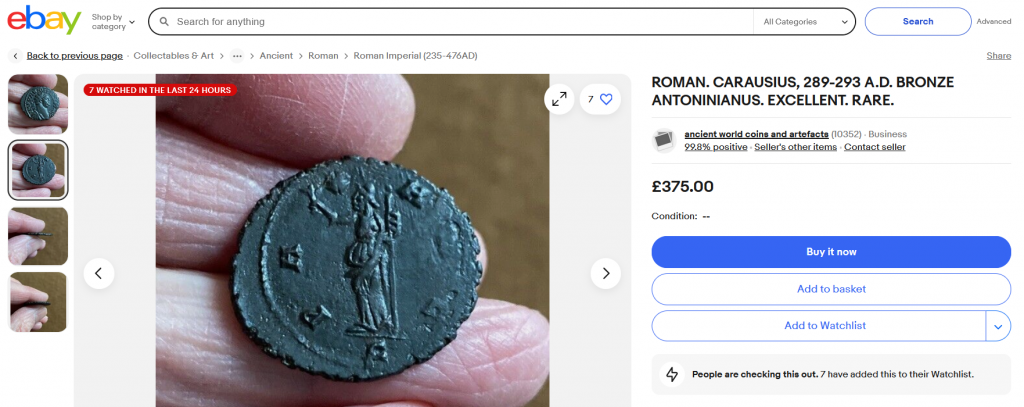
The Goddess Book of Days (Diane Stein) lists today as the birthday of Pax and her Greek equivalent Irene. She is the Goddess of Peace and the daughter of Jupiter and the Justitia, Goddess of Justice. This suggests that a lasting peace can only be assured by strength and justice. The usurping Emperor Carausius (whose coin you can see above) had good reason to use Pax on his coins. He took control of Britain and some of Gaul from the Roman Empire. But he hoped he might rule alongside the Tetrachy of Emperors set up by Diocletian.
This is what Eutropius wrote:
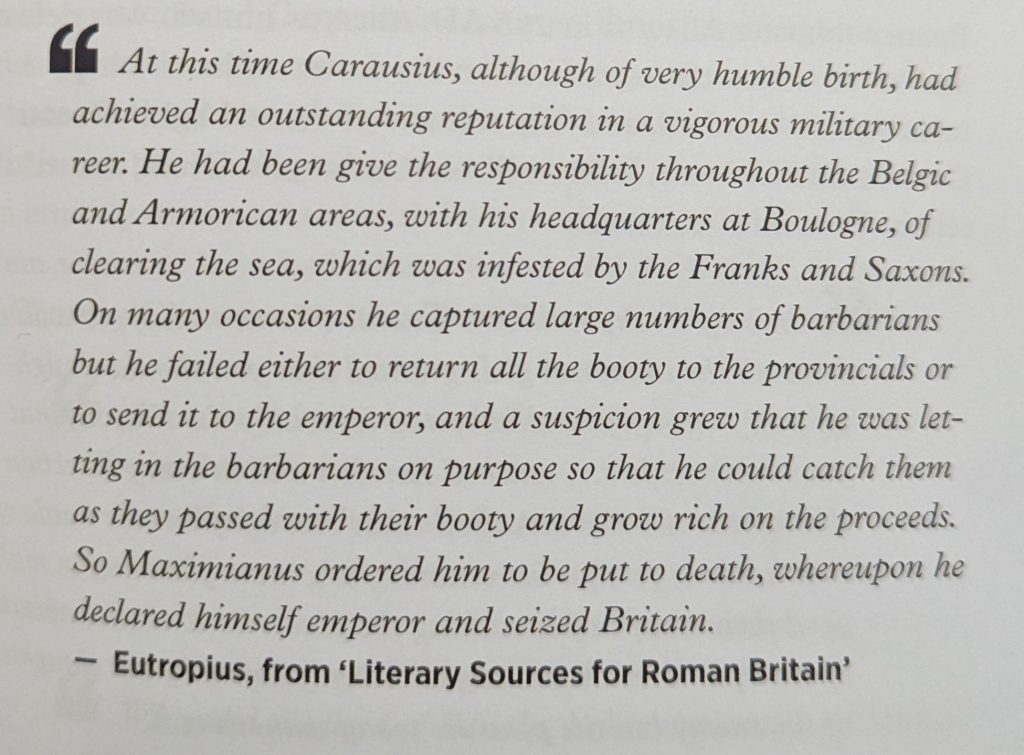
He was murdered by Allectus, his financial minister in 296AD. Text above taken from my book In Their Own Words where you can read the rest of Carausius’ story.
Concordia
The Goddess book also says this is the day of the Concordia Peace Festival in Rome. Concordia is the Goddess of agreement, in war, marriage and in civic society. Harmonia is the Greek equivalent. Ovid has special days to Concordia on January 17th and January 30th. I’m led to the idea that much of January was dedicated to Concordia and Pax. For more on Concordia, look at my January 17th post here.
Pax in Ovid
Pax had her festival on the 30th January. Ovid in Fasti writes:
Book I: January 30
My song has led to the altar of Peace itself.
This day is the second from the month’s end.
Come, Peace, your graceful tresses wreathed
With laurel of Actium: stay gently in this world.
While we lack enemies, or cause for triumphs:
You’ll be a greater glory to our leaders than war.
May the soldier be armed to defend against arms,
And the trumpet blare only for processions.
May the world far and near fear the sons of Aeneas,
And let any land that feared Rome too little, love her.
Priests, add incense to the peaceful flames,
Let a shining sacrifice fall, brow wet with wine,
And ask the gods who favour pious prayer
That the house that brings peace, may so endure.
Now the first part of my labour is complete,
And as its month ends, so does this book.
Translated by A. S. Kline 2004 (Tony has a lovely site here: where he makes his translations freely available.)
Concordia, Julia Aquilia Severa & Elagabalus
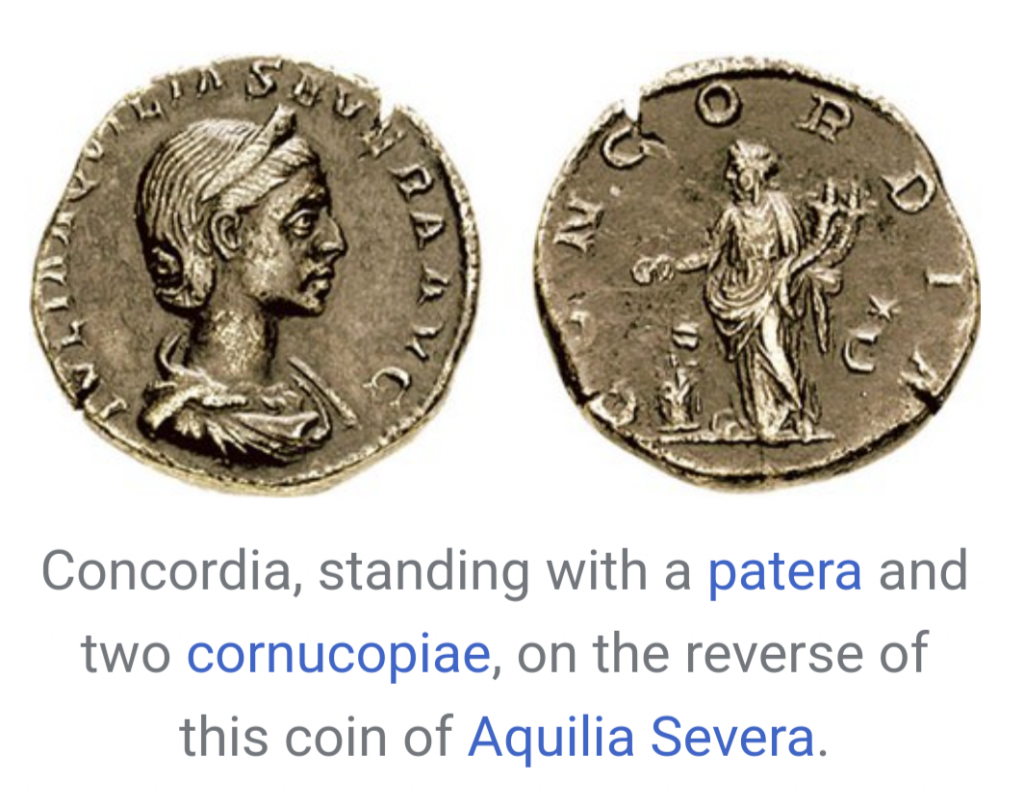
The coin above is of Empress Julia Aquilia Severa. She was a vestal virgin, who married the Emperor Elagabalus (c. 204 – 11/12 March 222). She was his 2nd and 4th wife. Normally, the punishment for a vestal Virgin losing their virginity was to be buried alive.
The Trouble with Pronouns
But I could have said ‘her 2nd and 4th wife’. Some sources suggest Elgabalus wanted to be known as a woman. The Wikipedia page of his wife has Elagabalus with the pronoun, ‘Her’. While the Emperor’s own web page uses ‘him’ throughout. He or she married several women. And also married to several men. They were also accused of prostituting himself in Taverns and Brothels. Clear? Confusing pronouns? Sorry to hedge my bets, but we don’t know what Elagabalus would want us to use? Wikipedia says:
‘In November 2023, the North Hertfordshire Museum in Hitchin, United Kingdom, announced that Elagabalus would be considered as transgender and hence referred to with female pronouns in its exhibits due to claims that the emperor had said “call me not Lord, for I am a Lady”‘
Elagabalus was born Sextus Varius Avitus Bassianus. He adopted the name of Elagabalus as he was a supporter of the Syrian Sun God Elagabal. He, a Syrian, wanted to promote the God to the top of the Roman Pantheon of Gods. Elagabalus rose to power partly because of his strong Grandmother, Julia Maesa. She was the sister of Julia Domna, the wife of African Emperor Septimus Severus (who lived for some time in York). Their children are the Emperors in Gladiator II starring Paul Mescal. Caracalla was Elagabalus’s cousin.
Elagabalus’s reign was fairly chaotic. He lost power, when his Grandmother transferred support to his cousin, Alexander. Elagabalus and his mother were assassinated.
Here, is a fascinating article in the Guardian about the Pax Romana. ‘Their heads were nailed to trees.’
Pax & Tagging
Posh boys in England, playing tagging games, used to shout ‘Pax’ to claim immunity or to call a temporary halt in the contest. I remember my childhood friends using the word ‘vainites’ as well as pax. But we were not by any means posh. There are many other ‘truce’ terms in tagging games. See them in this fascinating. Wikipedia page. From which I discover that Vainites comes from the medieval period and means: ‘to make excuses, hang back or back out of battle’.
First Published in January 2024, and revised, expanded and retitled in January 2025. Republished 2026