And Did Those Feet has extensive experience of working in the heritage field. It has run several small museums, provided consultancy for many museums and leading heritage organisations. and managed many event programmes, lectures, walks, cultural study tours, and conferences.
Kevin Flude lectured at:
Central St Martins College on the M.A. For Narrative Environments course
University of Westminster on the ‘Londinium to the Blitz’ module. and other courses
I am a former Honorary Lecturer at UCL and Associate Lecturer at the University of Worcester teaching museum based modules. I also gave a 10 week course on the History of Museums to Stevenage Art Society
I have worked on projects in collaboration with a range of organisations including the British Museum, Camden Council and the National Trust.
I have a huge range of Lectures, Guided Walks and Study tours which I do or have done. Currently, I am doing Study Tours for Road Scholar, Guided and Virtual Walks for London Walks and University courses for Central St. Martins.
I am preparing a new season of study tours for Road Scholar with the programme:
‘Quintessential Britain’ which takes in London, Oxford, Bath, Stonehenge, Cotswold, Chester, Wales, Haworth, York, Edinburgh and other places en route.
I do many guided and virtual walks for the marvellous London Walks. You can see my upcoming walks here:
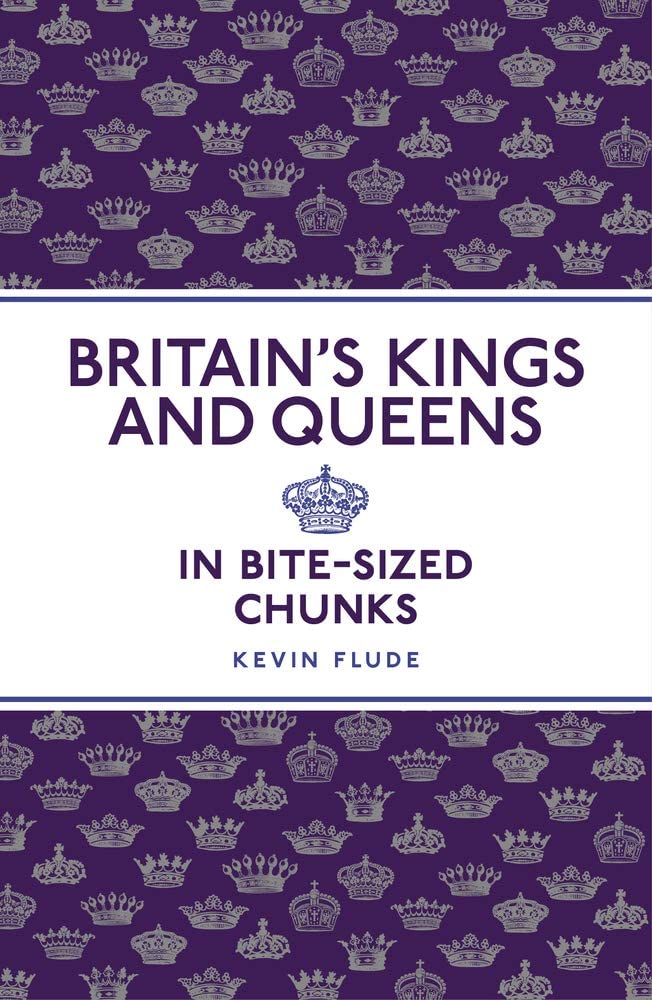
Michael O’mara Books, 2021 (Reprint). Kevin Flude To buy click here.
What is unique about my history of the Kings and Queens of this fair Isle is that it is not just the Kings and Queens of England. Starting with William the Conqueror, or Alfred the Great. No, it is the Kings and Queens of Britain, beginning with the legendary ones like King Brutus, King Bladud and King Leir. It has sections on the Emperors who ruled from Britain; the Dark Age War Lords, Saxon Kings and all the Kings and Queens from King Alfred onwards. And then and selection of Welsh and Scottish Kings. You will find nothing else like it for a survey of British Royalty through the ages.
As of 7/12/2022 this has sold 135,772 copies in 7 editions and formats (not counting audio). It has been on sale in the British Library, and is still on sale at the British Museum where once it was displayed in 7 different locations in the shop. (Yes, I did count them). To buy click here
This has also been published by Michael O’Mara books as:
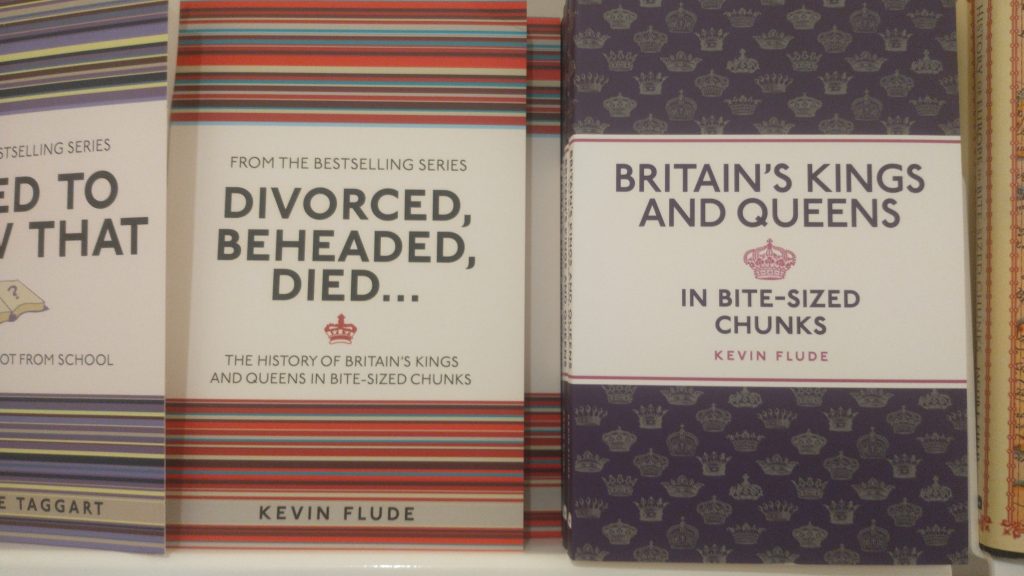
‘Divorced, Beheaded, Died ‘by Kevin Flude photographed at the British Museum Shop
‘Divorced, Beheaded, Died …the History Of Britain’s Kings And Queens in Bite-sized chunks’ Michael O’mara Books, 2009. Kevin Flude To buy click here
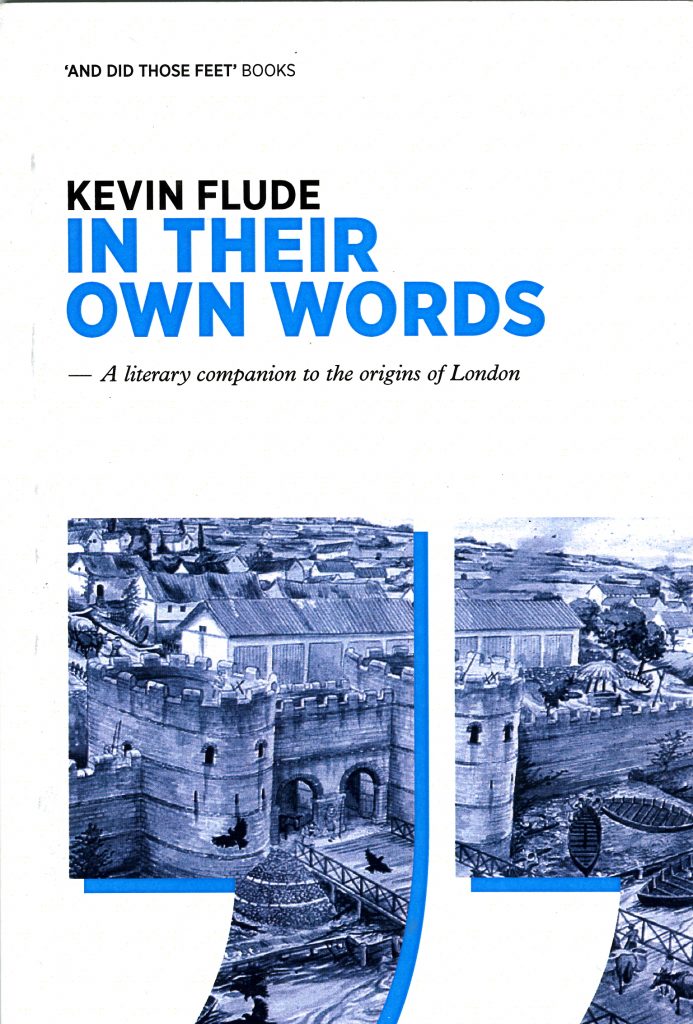
‘In Their Own Words – A Literary Companion To The Origins Of London‘
D A Horizons, 2009, republished on Amazon 2024. Kevin Flude
A Literary Companion to the origins of London
‘In their Own Words’ is a rather wonderful collection of historic and literary quotations about Britain and London from the origins of London to the foundation of St Pauls in 604AD. The quotations are linked by my commentary which gives an introduction to the legends of London, the conquest of Britain by the Romans, and an idea of the Roman view of life in a Roman town. Really is a good read.
It has recently (Dec 2024) been republished as a paperback on Amazon.
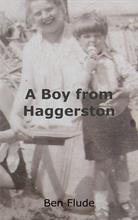
A Boy from Haggerston by Ben Flude A book that vividly shows the hardship of life for working class for Londoners before World War 2. The Author tells his life story, from humble beginnings in London’s East End to the beginnings of a professional career and married life in Surrey. Ben Flude’s Mum was from a large East End family brought up in a two-roomed flat. His Dad was from a family of Umbrella Makers, who transferred his skills to begin a career in servicing early aeroplanes for the Royal Flying Corp at Croydon Aerodrome. Ben’s Mum had a good job working in the canteen of the Bovril Factory in Old Street, but, convention insisted she had to give it up as soon as she got married. So, everything changed when his Dad died unexpectedly from a perforated ulcer, at only 28 year’s old. The book tells the story of how the family coped, not just with poverty and poor housing, but with war, evacuation and service in the Armed Forces.
While I was director (for 25 years) of the Old Operating Theatre Museum, I found a handwritten list of medical information recorded in the historical documents of St Thomas’s Hospital in London. I then discovered a book which was the medical case notes of Shakespeare’s son-in-law, Dr John Hall. I gave museum talks about it, and then wrote up my notes and this pamphlet emerged which gives an introduction to medicine in the time of Shakespeare. I have not yet released on the public, but occasionally print a few for sale. So if you want one, email me: kpflude AT anddidthosefeet.org.uk
‘Citisights Guide to London. Ten Walks through London’s Past’
Virgin Books. 1991. Kevin Flude and Paul Herbert (republished 2001 Authors Choice Press)
While I was at the Museum of London and also running, with Paul Herbert, a small guided walks company called ‘Citisights of London’ we published a history of London in 10 walks. While some of it is out of date, it still gives a credible history of London and 10 walks.
Usborne 1984 Barbara Cork, Struan Reid, Iain Ashman, Dr Anne Millard and Kevin Flude
I was the archaeological consultant on this children’s book. At the time, I had just left the Museum of London and was starting a whole new career at the V&A.
As with the books above you can buy these second hand books at the wonderful Abebooks. This will link you to the Usborne Young Scientist page.
I republished this two days ago, but I think it did not get distributed to subscribers. So I’m posting it again. On May 31st, 1915 Zeppelin LZ38 came into UK airspace over Margate. It proceeded to Stoke Newington in N London at 10.55. It was a dark, moonless night. No searchlights found the ship, no …
I republished this yesterday, but I think it did not get distributed to subscribers. So I’m posting it again. June is, probably, named after Juno, the leading lady of Olympus, sister and brother to the Great God Jupiter (Jove). In Welsh, it’s ‘Mehefin’ – Midsummer. Gaelic: ‘An t’Og mhios’ – the Young Month. Anglo-Saxon, ‘Litha’, …
The Cotswold Olimpicks take place on the Thursday and Friday of the week of Whitsun, normally between mid-May and mid-June. This year it was on May 29th. The Olimpicks were set up by Robert Dover on Dover’s Hill near Chipping Camden, in the early 17th Century. Inspired by the Greek Olympics, he felt the modern …